UNCLASSIFIED
LI 2136 - AN/SQQ-89 Surf ASW Cmbt Sys
UNCLASSIFIED
Navy Page 1 of 28 P-1 Line #38
Exhibit P-40, Budget Line Item Justification: PB 2021 Navy
Date: February 2020
Appropriation / Budget Activity / Budget Sub Activity:
1810N: Other Procurement, Navy / BA 02: Communications & Electronics Equip /
BSA 2: Ship Sonars
P-1 Line Item Number / Title:
2136 / AN/SQQ-89 Surf ASW Cmbt Sys
ID Code (A=Service Ready, B=Not Service Ready): A Program Elements for Code B Items: N/A Other Related Program Elements: 0205620N, 0603553N
Line Item MDAP/MAIS Code: N/A
Resource Summary
Prior
Years FY 2019 FY 2020
FY 2021
Base
FY 2021
OCO
FY 2021
Total FY 2022 FY 2023 FY 2024 FY 2025
To
Complete Total
Procurement Quantity (Units in Each) - - - - - - - - - - - -
Gross/Weapon System Cost ($ in Millions) 1,978.469 114.344 121.966 128.664 0.000 128.664 135.722 138.306 139.602 141.452 Continuing Continuing
Less PY Advance Procurement ($ in Millions) - - - - - - - - - - - -
Net Procurement (P-1) ($ in Millions) 1,978.469 114.344 121.966 128.664 0.000 128.664 135.722 138.306 139.602 141.452 Continuing Continuing
Plus CY Advance Procurement ($ in Millions) - - - - - - - - - - - -
Total Obligation Authority ($ in Millions) 1,978.469 114.344 121.966 128.664 0.000 128.664 135.722 138.306 139.602 141.452 Continuing Continuing
(The following Resource Summary rows are for informational purposes only. The corresponding budget requests are documented elsewhere.)
Initial Spares ($ in Millions) - 3.091 2.636 1.376 - 1.376 1.762 2.612 2.205 2.245 Continuing Continuing
Flyaway Unit Cost ($ in Dollars) - - - - - - - - - - - -
Gross/Weapon System Unit Cost ($ in Dollars) - - - - - - - - - - - -
Description:
FY 2020 ($121.966M) to FY 2021 ($128.664M) increase ($+6.698M) is primarily due to the net effect of changes to:
Hardware Buys (-3):
- 1 less A(V)15 FLT IIA shipset buy
+ 1 additional A(V)15 FLT I/II shipset buy
- 2 less A(V)15 Tech Refresh shipset buys
- 1 less standalone Multi-Function Towed Array (MFTA) Major Equipment buy
- 1 less Surface Ship Engineering Site (SSES) upgrade
+ 1 additional Surface Combatant Systems Center (SCSC) Wallops upgrade
Installations (+4):
- 1 less A(V)15 FLT IIA shipset install
+ 2 additional A(V)15 FLT I/II shipset installs
+ 3 additional A(V)15 Tech Refresh shipset installs
Test Events (+6):
+ 1 additional Follow-On Operational Test & Evaluation (FOT&E) event
+ 5 additional Combat System Ship Qualification Trial (CSSQT) events
Major Engineering Changes (ECs):
- Addition of EC funding starting in FY 2021 ($+3.957M) to productize and backfit a cyber mitigation to the software for the Technical Insertion/Advanced Capability Build (TI/ACB) TI-14/ACB-13, TI-14/ACB-15,
TI-16/ACB-15, TI-18/ACB-17 and TI-18/ACB-19 configurations of the AN/SQQ-89A(V)15 Surface Ship ASW Combat System. Other high priority Fleet Incident Reports (IRs) will be addressed in conjunction with
these cyber upgrades, as they arise. These upgrades proactively increase the level of complexity for an adversary to develop and employ cyber exploits against AN/SQQ-89 TI/ACBs with this capability (rather
than reactively patching software after a cyber threat is detected).
Volume 2 - 11
UNCLASSIFIED
LI 2136 - AN/SQQ-89 Surf ASW Cmbt Sys
UNCLASSIFIED
Navy Page 2 of 28 P-1 Line #38
Exhibit P-40, Budget Line Item Justification: PB 2021 Navy
Date: February 2020
Appropriation / Budget Activity / Budget Sub Activity:
1810N: Other Procurement, Navy / BA 02: Communications & Electronics Equip /
BSA 2: Ship Sonars
P-1 Line Item Number / Title:
2136 / AN/SQQ-89 Surf ASW Cmbt Sys
ID Code (A=Service Ready, B=Not Service Ready): A Program Elements for Code B Items: N/A Other Related Program Elements: 0205620N, 0603553N
Line Item MDAP/MAIS Code: N/A
Overall AN/SQQ-89(V) Program Description:
Anti-Submarine Warfare (ASW) remains a Navy core competency in a dynamic and uncertain maritime environment. U.S. adversaries continue to develop asymmetric capabilities and capacities to deter,
disrupt, or delay the entry of U.S. and allied naval forces, and pose a constant challenge as the Maritime Strategy is implemented. Evolving submarine technologies offer enhanced stealth, speed, endurance,
weapons, and operational proficiency, trends foretelling that the adversary submarine of the future will have a significantly larger sphere of influence, while presenting less vulnerability to ASW forces. The
effective offensive engagement range of the adversary submarine of the future will continue to match or outrange individual U.S. and multinational platform sensors and weapons in many tactical environments.
Submarines are an increasing threat to all Naval and Allied ships, particularly modern diesel and state-of-the-art nuclear submarines, and faster, more accurate torpedoes. Not only can the presence of potential
hostile submarines delay naval combatant action until they are located and neutralized, submarines can also disrupt all seaborne logistics supply for any ground campaign as well as maritime commerce. ASW
forces must be effective in all operating environments, ranging from the deep open ocean to the littorals, and are key to countering adversarial anti-access and area denial strategies.
The AN/SQQ-89(V) Surface Ship ASW Combat System provides integrated Undersea Warfare (USW) combat management, fire control, command and control, and on-board training to enable surface
combatants to engage USW targets in both open ocean and littoral environments. The AN/SQQ-89(V) is a system comprised of many subsystems, which integrate the helo and its sensors, the ship's own
organic sensors, weapons, torpedo detection, and a high fidelity Surface ASW Synthetic Trainer (SAST). Variants of the AN/SQQ-89(V) are currently in operation on in-service CG47 and DDG51 Class Surface
Combatants.
AN/SQQ-89A(V)15 Surface Ship ASW Combat System Upgrade - Detailed Description:
A major upgrade to the AN/SQQ-89(V) legacy system, the AN/SQQ-89A(V)15 significantly decreases ship vulnerability to torpedo attack, improves surface ship USW lethality, and mitigates Commercial-Off-The-
Shelf (COTS) obsolescence and supportability issues. The need for the AN/SQQ-89A(V)15 is articulated in Operational Requirements Document (ORD) #667-76-05 titled 'AN/SQQ-89 Improvement Program'.
The AN/SQQ-89A(V)15 upgrade is programmed for backfit on: select CG47 Class Baseline 3 and 4 (CGs 59-73) ships budgeted under OPN BLI 0960 (Cruiser Modernization); DDG51 Class Flight I/II (DDGs
51-78) ships budgeted under OPN BLI 0900 (DDG Modernization) and OPN BLI 2136 (represented here); and DDG51 Class Flight IIA and onward via OPN BLI 2136 (for DDGs 79-132 represented here) and
SCN BLI 2122 (DDG51 Class Forward Fit for DDGs 133 and follow).
The AN/SQQ-89A(V)15 upgrade, developed under the RDT&EN Program Element (PE) 0205620N Project 1916 Surface ASW System Improvement program, capitalizes on previously fielded AN/SQQ-89(V)
systems. The AN/SQQ-89A(V)15 is comprised of a tactical towed array sensor, the Multi-Function Towed Array (MFTA), and will replace standard, militarized, legacy components with Commercial-Off-The-Shelf
(COTS) hardware to provide an ASW combat system with the capability for mid-frequency bistatic and multi-static sonar operations. The AN/SQQ-89A(V)15 features a mid-frequency bistatic hull/towed Sonar
Echo Tracker Classifier (ETC); hull/towed Sonar with Acoustic Intercept (ACI) fused data for significantly improved torpedo defense; Handling & Stowage Group (H&SG) for MFTA operation; Torpedo Setting
Panel (TSP); passive towed array processing; common sub/surface sensor performance and prediction; common NAVAIR/Surface Light Airborne Multi-Purpose System (LAMPS) processing; portable software;
integrated supportability; and on-board training via the Surface ASW Synthetic Trainer (SAST). The AN/SQQ-89A(V)15 will be interoperable with AEGIS Weapons System (AWS) baselines; is Open Architecture
(OA) compliant (meeting OA Level 3 requirements); provides significant reductions in weight, space, cooling, and power requirements over legacy AN/SQQ-89(V) systems; is Grade A shock qualified; supports
Digital Fire Control Integration (DFCI) capability; and is integrated with the Battle Force Tactical Trainer (BFTT).
AN/SQQ-89A(V)15 Technology Insertion/Refresh - Detailed Description:
Additionally, to be effective against increasingly stealthy threats in an often ambiguous undersea environment, future sensors must be environmentally adaptive, have very low false alarm rates, and exploit
the full range of current and future submarine detection vulnerabilities. Via the Advanced Capability Build (ACB) process under RDT&EN PE 0205620N Project 1916 (ACB-15, ACB-17, ACB-19, etc.), these
types of maturing/proven USW technologies will be folded into the AN/SQQ-89A(V)15 production and future technology refresh programs. Leveraging the submarine community's Acoustic Rapid Commercial-
off-the-Shelf (COTS) Insertion (ARCI) process, the AN/SQQ-89A(V)15 Tech Refresh program procures upgraded software/hardware technology for all CG47 and DDG51 Class surface combatant platforms
with a previously fielded AN/SQQ-89A(V)15. This process has proven to manage obsolescence, take advantage of commercial development efforts, and continue to pace the threat to ensure systems remain
effective well into the 21st century. Studies of the submarine and surface ASW technology show that system upgrades are most critical six to nine (6 to 9) years after initial installation of the AN/SQQ-89A(V)15,
Volume 2 - 12
UNCLASSIFIED
LI 2136 - AN/SQQ-89 Surf ASW Cmbt Sys
UNCLASSIFIED
Navy Page 3 of 28 P-1 Line #38
Exhibit P-40, Budget Line Item Justification: PB 2021 Navy
Date: February 2020
Appropriation / Budget Activity / Budget Sub Activity:
1810N: Other Procurement, Navy / BA 02: Communications & Electronics Equip /
BSA 2: Ship Sonars
P-1 Line Item Number / Title:
2136 / AN/SQQ-89 Surf ASW Cmbt Sys
ID Code (A=Service Ready, B=Not Service Ready): A Program Elements for Code B Items: N/A Other Related Program Elements: 0205620N, 0603553N
Line Item MDAP/MAIS Code: N/A
as failure rates within this period begin to rise. Establishing a stable technology refresh program will ensure the Fleet maintains critical Undersea Warfare capability (threat-pacing improvements) and productivity
(Increased Operational Availability (Ao)) while reducing the Total Ownership Cost (TOC) to the Navy.
AN/SQQ-89A(V)15 YEAR-TO-YEAR FUNDING PROFILE FROM PROCUREMENT TO INSTALL:
1st Budget Year - Procurement of equipment.
2nd Budget Year - Ordering of incidental installation material and performance of mandatory advance planning yard design tasks and ship checks, which are required to be budgeted in the year *prior* to the
physical installation of equipment. These installation costs are depicted in the P-3a exhibit with a quantity of "0".
3rd Budget Year - Installation of equipment.
An average, aggregate AN/SQQ-89A(V)15 shipset unit cost is comprised of multiple contract/funding vehicles. Additionally, these unit costs can vary as they are dependent on the pre-existing legacy AN/
SQQ-89(V) configuration of each ship.
AN/SQQ-89A(V)15 production shipset delivery time is 18 months after contract award. Each subsequent system procured in an FY is delivered one month later than the previous system. Delivery of equipment to
the shipyard is preferably no later than 30-90 days prior to a CONUS (Continental U.S.) installation start date, and no later than 120 days prior to a non-CONUS installation start date. Installations are assigned to
specific ships as per Fleet priorities/requirements, and based on ship availabilities. Fleet availability periods to support a major upgrade such as the AN/SQQ-89A(V)15 normally occur only once every three years
in a ship's schedule.
See the following for a description of all P-40a and P-3a cost items that make up this budget:
[P40A / DB400 - DDG51 CLASS SYSTEM COMPONENTS - SQQ-89A(V)15]: DB400 Cost Elements/Descriptions as Follows:
[P40A / SYSTEM UPDATES (NON RECURRING ENGINEERING)]: Item Number 1.1 - Consists of the NRE efforts associated with the technology refresh/replacement of legacy AN/SQQ-89(V) equipment with
updated Commercial-Off-The-Shelf (COTS) processors, including material procurement, fabrication, and integration of Government Furnished Property (GFP), as performed by the prime contractor. Hardware
reviews will be conducted on an annual basis to determine if hardware changes are warranted based on Commercial-Off-The-Shelf (COTS) obsolescence and to identify applicable state-of-the-practice hardware
components. This line also includes start-up/transition funding required for the AN/SQQ-89(V) prime in the first year of each new production/design agent contract.
[P40A / ENGINEERING CHANGES (ECs)]: Item Number 1.2 - Consists of Engineering Change Proposals (ECPs) and hardware/software changes/upgrades to previously fielded and in-production AN/
SQQ-89A(V)15 systems. Funding will be used to support non-recurring first article test efforts associated with the changing Commercial-Off-The-Shelf (COTS) environment as well as Reliability, Maintainability,
and Availability (RM&A) modifications requested by the Fleet; correct deficiencies identified through Fleet use; upgrade unreliable components; replace obsolete components; and correct design errors found
during testing.
- FY 2020 to FY 2021 increase ($+3.957M) reflects the addition of funding starting in FY 2021 for a major Engineering Change (EC) required to productize and backfit a cyber mitigation to the software for
the Technical Insertion/Advanced Capability Build (TI/ACB) TI-14/ACB-13, TI-14/ACB-15, TI-16/ACB-15, TI-18/ACB-17 and TI-18/ACB-19 configurations of the AN/SQQ-89A(V)15 Surface Ship ASW Combat
System. Other high priority Fleet Incident Reports (IRs) will be addressed in conjunction with these cyber upgrades, as they arise. These upgrades proactively increase the level of complexity for an adversary to
develop and employ cyber exploits against AN/SQQ-89 TI/ACBs with this capability (rather than reactively patching software after a cyber threat is detected).
[P40A / INTEGRATED LOGISTICS SUPPORT (ILS)]: Item Number 1.3 - Funding is provided for all ILS planning and coordination elements associated with every AN/SQQ-89A(V)15 modification/procurement/
installation, including: configuration management and control of the hardware and software associated with each modification such as Maintenance and Material Management (3M); planned and corrective
maintenance procedures and drawings; supporting the procurement of upgrades to Technical Training Equipment (TTE) for shore training sites; changes to maintenance concepts and associated updates to
technical documentation, such as technical manuals; development of revisions to both operator and maintenance training materials as part of the initial training curriculum development; revisions to the Navy
Training System Plan; initial conduct of instructor training (train-the-trainer) until such time that the training community assumes the responsibility; modifications to supply support related provisioning data and
Volume 2 - 13
UNCLASSIFIED
LI 2136 - AN/SQQ-89 Surf ASW Cmbt Sys
UNCLASSIFIED
Navy Page 4 of 28 P-1 Line #38
Exhibit P-40, Budget Line Item Justification: PB 2021 Navy
Date: February 2020
Appropriation / Budget Activity / Budget Sub Activity:
1810N: Other Procurement, Navy / BA 02: Communications & Electronics Equip /
BSA 2: Ship Sonars
P-1 Line Item Number / Title:
2136 / AN/SQQ-89 Surf ASW Cmbt Sys
ID Code (A=Service Ready, B=Not Service Ready): A Program Elements for Code B Items: N/A Other Related Program Elements: 0205620N, 0603553N
Line Item MDAP/MAIS Code: N/A
identification of related changes to Allowance Parts Lists (APLs) and Program Support Data (PSD) spares procurement lists; and Packaging, Handling, Storage and Transportation (PHST) support during the
procurement, Installation and Checkout (INCO), and testing stages of the AN/SQQ-89A(V)15 to meet evolving capabilities.
[P40A / AEGIS INTEGRATION EVENTS (AIE)]: Item Number 1.4 - Recurring engineering support services associated with AN/SQQ-89A(V)15 Surface Ship ASW Combat System equipment at the Surface
Combatant Systems Center (SCSC) Wallops Island, VA test facility to support land-based testing, external interface testing, and AEGIS Integration Event (AIE) production systems testing for interoperability risk
reduction analysis purposes as necessary to certify that each incremental AN/SQQ-89A(V)15 hardware/software build is compatible with multiple AEGIS Weapons System (AWS) baselines prior to installation.
[P40A / COMBAT SYSTEMS SHIP QUALIFICATION TRIALS (CSSQTs)]: Item Number 1.5 - CSSQTs are required per Naval Sea Systems Instruction 90963.1C for all ships undergoing significant conversion/
modernization availabilities. CSSQTs consist of a series of at-sea exercises and tests to verify/certify the AN/SQQ-89A(V)15 or AN/SQQ-89A(V)15 Technology Refresh system has been installed properly
and can be operated and maintained safely and effectively. CSSQTs follow every AN/SQQ-89A(V)15 FLT I/II/IIA first-of-its-kind or AN/SQQ-89A(V)15 Technology Refresh installation. CSSQT costs are
dependent on the number, scope, and complexity of CSSQTs planned per Fiscal Year (FY). CSSQTs planned for AN/SQQ-89A(V)15 FLT I/II/IIA installs are higher in cost, scope and complexity than those for
AN/SQQ-89A(V)15 Technology Refreshes.
FY 2020 and FY 2021 costs are broken down as follows:
- In FY 2020 ($3.791M total), four (4) CSSQTs are planned (one (1) after a major AN/SQQ-89A(V)15 FLT IIA install at $1.166M per CSSQT = $1.166M, and three (3) after AN/SQQ-89A(V)15 Technology Refresh
installs at $0.875M per CSSQT = $2.625M).
- In FY 2021 ($7.736M total), eight (8) CSSQTs are planned (two (2) after major AN/SQQ-89A(V)15 FLT I/II installs at $1.189M per CSSQT = $2.378M, and six (6) after AN/SQQ-89A(V)15 Technology Refresh
installs at $0.893M per CSSQT = $5.358M).
[P40A / FOLLOW-ON OPERATIONAL TEST & EVALUATION (FOT&E)]: Item Number 1.6 - Represents the final independent test of each new increment of the AN/SQQ-89A(V)15 production baseline (i.e.
ACB-15, ACB-17, ACB-19, etc.) conducted in support of the Director, Operational Test and Evaluation Title X review and report to the Congress. Follow-On Operational Test & Evaluation (FOT&E) events
are conducted to ensure each increment meets the operational effectiveness and suitability requirements for each incremental AN/SQQ-89 ACB production baseline, along with its readiness and performance
goals. Each test cycle is planned the year after initial ACB baseline fielding to allow time for installation and to verify performance prior to conducting the FOT&E. FOT&E costs are primarily biennial driven, and
dependent on the scope and complexity of the next new AN/SQQ-89 Advanced Capability Build (ACB) production baseline release being tested.
FY 2020 and FY 2021 costs are broken down as follows:
- In FY 2020, there is no requirement to conduct an FOT&E event.
- In FY 2021 ($2.131M), funding is required to conduct an FOT&E event on the next new AN/SQQ-89A(V)15 ACB production baseline release.
[P40A / FLEET ASW TRAINING CENTER (FLTASWTRACEN)]: Item Number 1.7 - Upgrade and virtualization of AN/SQQ-89A(V)15 training equipment for the Fleet ASW Training Center, San Diego, CA.
Training system improvements are a critical factor in achieving warfighter competencies and mission readiness. Equipment must be upgraded periodically to ensure continued support of the latest backfit
Advanced Capability Build (ACB) and AEGIS Weapon System (AWS) baselines and to implement Fleet prioritized warfighting training improvements to meet evolving capabilities. FLTASWTRACEN costs are
dependent on the scope and complexity of training equipment to be upgraded to ensure continued support of the latest AN/SQQ-89A(V)15 backfit Advanced Capability Build (ACB) and AEGIS Weapon System
(AWS) baselines.
[P40A / SURFACE SHIP ENGINEERING SITE (SSES)]: Item Number 1.8 - Procurement of AN/SQQ-89A(V)15 equipment for land-based sites, including the SSES at the AN/SQQ-89(V) prime vendor's facility,
to support production system integration and interoperability testing. Equipment includes simulation hardware, test tools, fabrication and test of mod kits (hardware and operational software), and laboratory
equipment. Equipment must be upgraded periodically to ensure continued support of the latest backfit AN/SQQ-89A(V)15 Advanced Capability Build (ACB) and AEGIS Weapon System (AWS) baselines. SSES
Volume 2 - 14
UNCLASSIFIED
LI 2136 - AN/SQQ-89 Surf ASW Cmbt Sys
UNCLASSIFIED
Navy Page 5 of 28 P-1 Line #38
Exhibit P-40, Budget Line Item Justification: PB 2021 Navy
Date: February 2020
Appropriation / Budget Activity / Budget Sub Activity:
1810N: Other Procurement, Navy / BA 02: Communications & Electronics Equip /
BSA 2: Ship Sonars
P-1 Line Item Number / Title:
2136 / AN/SQQ-89 Surf ASW Cmbt Sys
ID Code (A=Service Ready, B=Not Service Ready): A Program Elements for Code B Items: N/A Other Related Program Elements: 0205620N, 0603553N
Line Item MDAP/MAIS Code: N/A
costs are primarily biennial driven, and dependent on the scope and complexity of shore site equipment to be upgraded to ensure continued support of the latest AN/SQQ-89A(V)15 backfit Advanced Capability
Build (ACB) and AEGIS Weapon System (AWS) baselines.
FY 2020 and FY 2021 costs are broken down as follows:
- In FY 2020 ($2.948M), funding is required to upgrade the equipment at the SSES land-based site.
- In FY 2021, there is no requirement to upgrade equipment at the SSES land-based site.
[P40A / SURFACE COMBATANT SYSTEMS CENTER (SCSC)]: Item Number 1.9 - Procurement of AN/SQQ-89A(V)15 equipment for land-based sites including the Surface Combatant Systems Center (SCSC)
at Wallops Island, VA, to support production system integration and interoperability testing. Equipment includes simulation hardware, test tools, fabrication and test of mod kits (hardware and operational
software), and laboratory equipment. Equipment must be upgraded periodically to ensure continued support of the latest backfit Advanced Capability Build (ACB) and AEGIS Weapon System (AWS) baselines.
SCSC Wallops costs are primarily biennial driven, and dependent on the scope and complexity of shore site equipment to be upgraded to ensure continued support of the latest AN/SQQ-89A(V)15 backfit
Advanced Capability Build (ACB) and AEGIS Weapon System (AWS) baselines.
FY 2020 and FY 2021 costs are broken down as follows:
- In FY 2020, there is no requirement to upgrade equipment at the SCSC Wallops Island land-based site.
- In FY 2021 ($2.027M), funding is required to upgrade the equipment at the SCSC Wallops Island land-based site.
[P40A / MULTI-FUNCTION TOWED ARRAY (MFTA) MAJOR EQUIPMENT]: Item Number 1.10 - Procurement of Multi-Function Towed Array (MFTA) full module sets required for expeditious replacement in the
event of major damage (the MFTA is considered a principle item). The MFTA is a key component of the AN/SQQ-89A(V)15 USW Combat System upgrade on Surface Combatants and enables ships to have
active bi-statics, Continuous Active Sonar (CAS), adaptive beamforming, passive bellringers, and the use of new sensors for advanced torpedo detection. FY 2020 and follow MFTA procurements are of the
improved TB-37X version which is required to address and resolve deficiencies in the current MFTA TB-37 version's reliability (by changing from a Towed Array Integrated Product Team (TAIPT) telemetry to a
more reliable telemetry), address and resolve parts obsolescence issues, as well as procure additional MFTA TB-37X handling sensors and non-acoustic node (NAS) hardware, and the packaging modifications
needed to fit the new components.
[P40A / DB830 - PRODUCTION ENGINEERING - SQQ-89A(V)15]: DB830 Cost Element/Description as Follows:
[P40A / PRODUCTION ENGINEERING]: Item Number 2.1 - Funding is for AN/SQQ-89A(V)15 program In-Service Engineering Agent (ISEA), Software Support Activity (SSA), Acquisition Engineering Agent
(AEA), and Technical Design Agent (TDA) efforts in performing the following functions: writing of contracts; review and evaluation of production design data, documentation and Contract Data Requirements
Lists (CDRLs); letting of production contract awards; on-site engineering support at the prime integrator's facility; production configuration control and quality assurance (Production Inspection Test (PIT) and
Production Reliability Acceptance Test (PRAT)); witnessing of segment/system integration tests and preparation of reports; conduct of first article and factory acceptance tests; collection of performance metrics;
generation/assessment of Software Problem Reports (SPRs) and coordination with vendors; value and maintenance engineering; coordination with AEGIS regarding interface definition and ship integration;
support safety review and AEGIS Integration Events (AIE); provide plans, procedures and inputs to support Information Assurance (IA) mandates; provide status reports and technical briefings; support meetings
with program office; and all other production support efforts directly related to delivery of AN/SQQ-89A(V)15 software and hardware.
[P40A / DB900 - CONSULTING SERVICES - SQQ-89A(V)15]: DB900 Cost Element/Description as Follows:
Volume 2 - 15
UNCLASSIFIED
LI 2136 - AN/SQQ-89 Surf ASW Cmbt Sys
UNCLASSIFIED
Navy Page 6 of 28 P-1 Line #38
Exhibit P-40, Budget Line Item Justification: PB 2021 Navy
Date: February 2020
Appropriation / Budget Activity / Budget Sub Activity:
1810N: Other Procurement, Navy / BA 02: Communications & Electronics Equip /
BSA 2: Ship Sonars
P-1 Line Item Number / Title:
2136 / AN/SQQ-89 Surf ASW Cmbt Sys
ID Code (A=Service Ready, B=Not Service Ready): A Program Elements for Code B Items: N/A Other Related Program Elements: 0205620N, 0603553N
Line Item MDAP/MAIS Code: N/A
[P40A / CONSULTING SERVICES]: Item Number 3.1 - Funding to provide assistance in the following areas: program and financial management; system specification validation; production planning; business
case and market analyses; vendor cost, schedule, performance, production, and contract deliverable monitoring; installation planning and coordination; Integrated Logistics Support (ILS) asset management,
planning, documentation, and coordination; and evaluation of Engineering Change Proposals (ECPs).
[P3A / AN/SQQ-89A(V)15 - DDG79-112 FLT IIA UPGRADE]: See the following:
AN/SQQ-89A(V)15 - DDG79-112 FLT IIA UPGRADE - COST CODE DB400 PROCUREMENT: Procurement of AN/SQQ-89A(V)15 equipment for subsequent backfit installation on all DDG79-112 Flight IIA ships.
An average, aggregate AN/SQQ-89A(V)15 unit cost is indicated, however, it should be noted that this cost is comprised of multiple contract/funding vehicles. Additionally, the subdivision of these unit costs to a
specific ship can vary as they are dependent on the pre-existing configuration of each ship.
AN/SQQ-89A(V)15 - DDG79-112 FLT IIA UPGRADE - COST CODE DB6IN INSTALLATION: Funding is for the full-up physical installation of the major AN/SQQ-89A(V)15 upgrade, the ordering of incidental
installation material in the year prior to the actual installation, and Design Services Allocation (DSA) required for mandatory planning yard design tasks and ship checks that must be completed within the one year
period leading up to the actual installation in the shipyard.
[P3A / AN/SQQ-89A(V)15 - DDG51-78 (SELECT) FLT I/II UPGRADE]: See the following:
AN/SQQ-89A(V)15 - DDG51-78 (SELECT) FLT I/II UPGRADE - COST CODE DB400 PROCUREMENT: Procurement of AN/SQQ-89A(V)15 equipment for subsequent backfit installation on select DDG51-78
FLT I/II ships. An average, aggregate AN/SQQ-89A(V)15 unit cost is indicated, however, it should be noted that this cost is comprised of multiple contract/funding vehicles. Additionally, the subdivision of these
unit costs to a specific ship can vary as they are dependent on the pre-existing configuration of each ship.
AN/SQQ-89A(V)15 - DDG51-78 (SELECT) FLT I/II UPGRADE - COST CODE DB6IN INSTALLATION: Funding is for the full-up physical installation of the major AN/SQQ-89A(V)15 upgrade, the ordering of
incidental installation material in the year prior to the actual installation, and Design Services Allocation (DSA) required for mandatory planning yard design tasks and ship checks that must be completed within
the one year period leading up to the actual installation in the shipyard.
[P3A - 3 / AN/SQQ-89A(V)15 - DDG113-132 MFTA/HANDLER UPGRADE]: See the following:
AN/SQQ-89A(V)15 - DDG113 AND FOLLOW MFTA/HANDLER UPGRADE - COST CODE DB400 PROCUREMENT: Procurement of a subset of AN/SQQ-89A(V)15 equipment, specifically the Multi-Function
Towed Array (MFTA) and Handling & Stowage Group (H&SG), for subsequent installation on all DDG113-132 ships during their Post Delivery Availability (PDA) or Post Shakedown Availability (PSA) periods, to
upgrade the ASW sonar suite from an AN/SQQ-89(V)15 configuration to the AN/SQQ-89A(V)15 configuration.
AN/SQQ-89A(V)15 - DDG113 AND FOLLOW MFTA/HANDLER UPGRADE - COST CODE DB6IN INSTALLATION: Physical installation of the H&SG and MFTA on DDG113-132 ships during their PDA or PSA
period which includes the installation of an egress, under-deck stiffeners, cables, bulkheads, opening and closing of the transom, the winch, levelwind, fairlead and control station, decking, painting, and final
system testing, the ordering of incidental installation material in the year prior to the actual installation, and Design Services Allocation (DSA) required for mandatory planning yard design tasks and ship checks
that must be completed within the one year period leading up to the actual installation in the shipyard.
[P3A - 4 / AN/SQQ-89A(V)15 - TECHNOLOGY INSERTION/REFRESH]: See the following:
AN/SQQ-89A(V)15 - TECHNOLOGY INSERTION/REFRESH - COST CODE DB400 PROCUREMENT: Procurement of software/hardware technology upgrades for all CG47/DDG51 Class surface combatant
platforms with a previously fielded AN/SQQ-89A(V)15, as necessary to manage obsolescence, take advantage of commercial development efforts, and continue to pace the threat and ensure the system remains
effective well into the 21st century. Updating the hardware and software will ensure the Fleet maintains critical Undersea Warfare capability while reducing obsolescence. Establishing a technology refresh
program provides a method for rapid response to meet Fleet Anti-Submarine Warfare (ASW) requirements.
Volume 2 - 16
UNCLASSIFIED
LI 2136 - AN/SQQ-89 Surf ASW Cmbt Sys
UNCLASSIFIED
Navy Page 7 of 28 P-1 Line #38
Exhibit P-40, Budget Line Item Justification: PB 2021 Navy
Date: February 2020
Appropriation / Budget Activity / Budget Sub Activity:
1810N: Other Procurement, Navy / BA 02: Communications & Electronics Equip /
BSA 2: Ship Sonars
P-1 Line Item Number / Title:
2136 / AN/SQQ-89 Surf ASW Cmbt Sys
ID Code (A=Service Ready, B=Not Service Ready): A Program Elements for Code B Items: N/A Other Related Program Elements: 0205620N, 0603553N
Line Item MDAP/MAIS Code: N/A
AN/SQQ-89A(V)15 - TECHNOLOGY INSERTION/REFRESH - COST CODE DB6IN INSTALLATION: Funding is for the physical installation of the AN/SQQ-89A(V)15 Technology Refresh upgrade, the ordering
of incidental installation material in the year prior to the actual installation, and Design Services Allocation (DSA) required for mandatory planning yard design tasks and ship checks that must be completed within
the one year period leading up to the actual installation in the shipyard.
Volume 2 - 17
UNCLASSIFIED
LI 2136 - AN/SQQ-89 Surf ASW Cmbt Sys
UNCLASSIFIED
Navy Page 8 of 28 P-1 Line #38
Exhibit P-40, Budget Line Item Justification: PB 2021 Navy
Date: February 2020
Appropriation / Budget Activity / Budget Sub Activity:
1810N: Other Procurement, Navy / BA 02: Communications & Electronics Equip /
BSA 2: Ship Sonars
P-1 Line Item Number / Title:
2136 / AN/SQQ-89 Surf ASW Cmbt Sys
ID Code (A=Service Ready, B=Not Service Ready): A Program Elements for Code B Items: N/A Other Related Program Elements: 0205620N, 0603553N
Line Item MDAP/MAIS Code: N/A
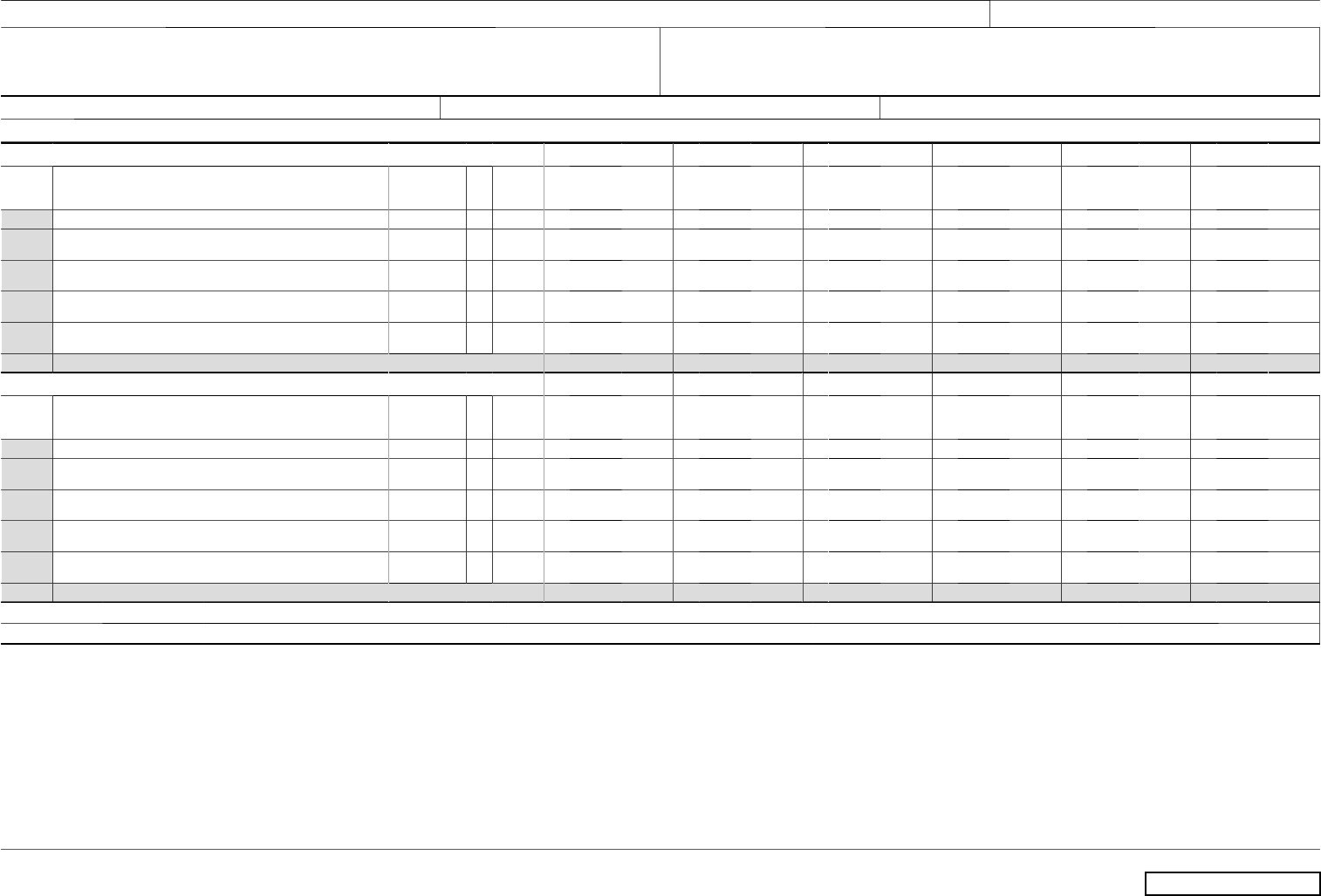
Exhibits Schedule Prior Years FY 2019 FY 2020 FY 2021 Base FY 2021 OCO FY 2021 Total
Exhibit
Type Title* Subexhibits
ID
CD
MDAP/
MAIS
Code
Quantity / Total Cost
(Each) / ($ M)
Quantity / Total Cost
(Each) / ($ M)
Quantity / Total Cost
(Each) / ($ M)
Quantity / Total Cost
(Each) / ($ M)
Quantity / Total Cost
(Each) / ($ M)
Quantity / Total Cost
(Each) / ($ M)
P-40a AN/SQQ-89(V) SURFACE ASW COMBAT SYSTEM P-5a - / 1,350.713 - / 32.679 - / 29.154 - / 34.455 - / - - / 34.455
P-3a 1 / AN/SQQ-89A(V)15 - DDG79-112 FLT IIA UPGRADE (Warfighting
Capability) - / 450.769 - / 6.737 - / 17.830 - / 1.189 - / 0.000 - / 1.189
P-3a 2 / AN/SQQ-89A(V)15 - DDG51-78 (SELECT) FLT I/II UPGRADE
(Warfighting Capability) - / 40.693 - / 23.785 - / 12.764 - / 31.954 - / 0.000 - / 31.954
P-3a 3 / AN/SQQ-89A(V)15 - DDG113-132 MFTA/HANDLER UPGRADE
(Warfighting Capability) - / 52.619 - / 15.301 - / 16.007 - / 16.329 - / 0.000 - / 16.329
P-3a 4 / AN/SQQ-89A(V)15 - TECHNOLOGY INSERTION/REFRESH
(Warfighting Capability) - / 83.675 - / 35.842 - / 46.211 - / 44.737 - / 0.000 - / 44.737
P-40 Total Gross/Weapon System Cost - / 1,978.469 - / 114.344 - / 121.966 - / 128.664 - / 0.000 - / 128.664
Exhibits Schedule FY 2022 FY 2023 FY 2024 FY 2025 To Complete Total
Exhibit
Type Title* Subexhibits
ID
CD
MDAP/
MAIS
Code
Quantity / Total Cost
(Each) / ($ M)
Quantity / Total Cost
(Each) / ($ M)
Quantity / Total Cost
(Each) / ($ M)
Quantity / Total Cost
(Each) / ($ M)
Quantity / Total Cost
(Each) / ($ M)
Quantity / Total Cost
(Each) / ($ M)
P-40a AN/SQQ-89(V) SURFACE ASW COMBAT SYSTEM P-5a - / - - / - - / - - / - - / - - / -
P-3a 1 / AN/SQQ-89A(V)15 - DDG79-112 FLT IIA UPGRADE (Warfighting
Capability) - / 5.897 - / 12.807 - / 1.255 - / 6.221 - / 0.000 - / 502.705
P-3a 2 / AN/SQQ-89A(V)15 - DDG51-78 (SELECT) FLT I/II UPGRADE
(Warfighting Capability) - / 28.964 - / 23.391 - / 11.307 - / 16.655 - / 6.572 - / 196.085
P-3a 3 / AN/SQQ-89A(V)15 - DDG113-132 MFTA/HANDLER UPGRADE
(Warfighting Capability) - / 16.655 - / 16.988 - / 17.326 - / 4.127 - / 3.704 - / 159.056
P-3a 4 / AN/SQQ-89A(V)15 - TECHNOLOGY INSERTION/REFRESH
(Warfighting Capability) - / 49.828 - / 51.128 - / 78.183 - / 78.210
Continuing Continuing
P-40 Total Gross/Weapon System Cost - / 135.722 - / 138.306 - / 139.602 - / 141.452 Continuing Continuing
*Title represents 1) the Number / Title for Items; 2) the Number / Title [DODIC] for Ammunition; and/or 3) the Number / Title (Modification Type) for Modifications. Title represents the P-40a Title when only the P-40a Summary/Total is shown.
Note: Totals in this Exhibit P-40 set may not be exact or sum exactly due to rounding.
Justification:
The FY 2021 budget request primarily supports the upgrade of legacy, in-service AN/SQQ-89(V) systems to the superior AN/SQQ-89A(V)15 USW Combat System baseline. Additionally, this budget line item will
be responsible for periodic technology refresh initiatives (every 6-9 years per AN/SQQ-89A(V)15 equipped ship) in conjunction with previously fielded AN/SQQ-89A(V)15 systems across all CG47 and DDG51
Class platforms (software/hardware technology upgrades/insertions) to pace the threat and remain effective well into the 21st century.
FY 2020 ($121.966M) to FY 2021 ($128.664M) increase ($+6.698M) is primarily due to the net effect of changes to:
Hardware Buys (-3):
- 1 less A(V)15 FLT IIA shipset buy
+ 1 additional A(V)15 FLT I/II shipset buy
- 2 less A(V)15 Tech Refresh shipset buys
Volume 2 - 18
UNCLASSIFIED
LI 2136 - AN/SQQ-89 Surf ASW Cmbt Sys
UNCLASSIFIED
Navy Page 9 of 28 P-1 Line #38
Exhibit P-40, Budget Line Item Justification: PB 2021 Navy
Date: February 2020
Appropriation / Budget Activity / Budget Sub Activity:
1810N: Other Procurement, Navy / BA 02: Communications & Electronics Equip /
BSA 2: Ship Sonars
P-1 Line Item Number / Title:
2136 / AN/SQQ-89 Surf ASW Cmbt Sys
ID Code (A=Service Ready, B=Not Service Ready): A Program Elements for Code B Items: N/A Other Related Program Elements: 0205620N, 0603553N
Line Item MDAP/MAIS Code: N/A
- 1 less standalone Multi-Function Towed Array (MFTA) Major Equipment buy
- 1 less Surface Ship Engineering Site (SSES) upgrade
+ 1 additional Surface Combatant Systems Center (SCSC) Wallops upgrade
Installations (+4):
- 1 less A(V)15 FLT IIA shipset install
+ 2 additional A(V)15 FLT I/II shipset installs
+ 3 additional A(V)15 Tech Refresh shipset installs
Test Events (+6):
+ 1 additional Follow-On Operational Test & Evaluation (FOT&E) event
+ 5 additional Combat System Ship Qualification Trial (CSSQT) events
Major Engineering Changes (ECs):
- Addition of EC funding starting in FY 2021 ($+3.957M) to productionize and backfit a cyber mitigation to the software for the Technical Insertion/Advanced Capability Build (TI/ACB) TI-14/ACB-13, TI-14/ACB-15,
TI-16/ACB-15, TI-18/ACB-17 and TI-18/ACB-19 configurations of the AN/SQQ-89A(V)15 Surface Ship ASW Combat System. Other high priority Fleet Incident Reports (IRs) will be addressed in conjunction with
these cyber upgrades, as they arise. These upgrades proactively increase the level of complexity for an adversary to develop and employ cyber exploits against AN/SQQ-89 TI/ACBs with this capability (rather
than reactively patching software after a cyber threat is detected).
Volume 2 - 19
UNCLASSIFIED
LI 2136 - AN/SQQ-89 Surf ASW Cmbt Sys
UNCLASSIFIED
Navy Page 10 of 28 P-1 Line #38
Exhibit P-40a, Budget Item Justification For Aggregated Items: PB 2021 Navy
Date: February 2020
Appropriation / Budget Activity / Budget Sub Activity:
1810N / 02 / 2
P-1 Line Item Number / Title:
2136 / AN/SQQ-89 Surf ASW Cmbt Sys
Aggregated Items Title:
AN/SQQ-89(V) SURFACE ASW
COMBAT SYSTEM
Prior Years FY 2019 FY 2020 FY 2021 Base FY 2021 OCO FY 2021 Total
Item Number /
Title [DODIC]
ID
CD
MDAP/
MAIS
Code
Unit Cost
($)
Qty
(Each)
Total
Cost
($ M)
Unit Cost
($)
Qty
(Each)
Total
Cost
($ M)
Unit Cost
($)
Qty
(Each)
Total
Cost
($ M)
Unit Cost
($)
Qty
(Each)
Total
Cost
($ M)
Unit Cost
($)
Qty
(Each)
Total
Cost
($ M)
Unit Cost
($)
Qty
(Each)
Total
Cost
($ M)
1) DB400 - DDG51 CLASS SYSTEM COMPONENTS - SQQ-89A(V)15
1.1) SYSTEM
UPDATES (NON
RECURRING
ENGINEERING)
- - 19.320 - - 1.529 - - 1.575 - - 1.607 - - - - - 1.607
1.2) ENGINEERING
CHANGES (ECs)
(1)
- - 1,102.083 - - 11.731 - - 2.171 - - 6.128 - - - - - 6.128
1.3) INTEGRATED
LOGISTICS
SUPPORT (ILS)
- - 43.037 - - 3.096 - - 3.065 - - 3.126 - - - - - 3.126
1.4) AEGIS
INTEGRATION
EVENTS (AIE)
- - 25.542 - - 2.042 - - 2.001 - - 2.041 - - - - - 2.041
1.5) COMBAT
SYSTEMS SHIP
QUALIFICATION
TRIALS (CSSQTs)
(2)
- - 38.035 - - 4.903 - - 3.791 - - 7.736 - - - - - 7.736
1.6) FOLLOW-ON
OPERATIONAL TEST
& EVALUATION
(FOT&E)
(3)
- - 6.485 - - 2.048 - - - - - 2.131 - - - - - 2.131
1.7) FLEET ASW
TRAINING CENTER
(FLTASWTRACEN)
- - 4.417 - - 0.973 - - 0.992 - - 1.012 - - - - - 1.012
1.8) SURFACE SHIP
ENGINEERING SITE
(SSES)
(4)
- - 14.197 - - - - - 2.948 - - - - - - - - -
1.9) SURFACE
COMBATANT
SYSTEMS CENTER
(SCSC)
(5)
- - 4.258 - - 1.910 - - - - - 2.027 - - - - - 2.027
1.10) MULTI-
FUNCTION
TOWED ARRAY
(MFTA) MAJOR
EQUIPMENT
(†)
A
- - - - - - 4,134K 2 8.267 4,217K 1 4.217 - - - 4,217K 1 4.217
Subtotal: 1) DB400 - DDG51
CLASS SYSTEM COMPONENTS -
SQQ-89A(V)15
- - 1,257.374 - - 28.232 - - 24.810 - - 30.025 - - - - - 30.025
2) DB830 - PRODUCTION ENGINEERING - SQQ-89A(V)15
2.1) PRODUCTION
ENGINEERING
- - 72.668 - - 3.191 - - 3.123 - - 3.185 - - - - - 3.185
Subtotal: 2) DB830 - PRODUCTION
ENGINEERING - SQQ-89A(V)15
- - 72.668 - - 3.191 - - 3.123 - - 3.185 - - - - - 3.185
Volume 2 - 20
UNCLASSIFIED
LI 2136 - AN/SQQ-89 Surf ASW Cmbt Sys
UNCLASSIFIED
Navy Page 11 of 28 P-1 Line #38
Exhibit P-40a, Budget Item Justification For Aggregated Items: PB 2021 Navy
Date: February 2020
Appropriation / Budget Activity / Budget Sub Activity:
1810N / 02 / 2
P-1 Line Item Number / Title:
2136 / AN/SQQ-89 Surf ASW Cmbt Sys
Aggregated Items Title:
AN/SQQ-89(V) SURFACE ASW
COMBAT SYSTEM
Prior Years FY 2019 FY 2020 FY 2021 Base FY 2021 OCO FY 2021 Total
Item Number /
Title [DODIC]
ID
CD
MDAP/
MAIS
Code
Unit Cost
($)
Qty
(Each)
Total
Cost
($ M)
Unit Cost
($)
Qty
(Each)
Total
Cost
($ M)
Unit Cost
($)
Qty
(Each)
Total
Cost
($ M)
Unit Cost
($)
Qty
(Each)
Total
Cost
($ M)
Unit Cost
($)
Qty
(Each)
Total
Cost
($ M)
Unit Cost
($)
Qty
(Each)
Total
Cost
($ M)
3) DB900 - CONSULTING SERVICES - SQQ-89A(V)15
3.1) CONSULTING
SERVICES
- - 20.671 - - 1.256 - - 1.221 - - 1.245 - - - - - 1.245
Subtotal: 3) DB900 - CONSULTING
SERVICES - SQQ-89A(V)15
- - 20.671 - - 1.256 - - 1.221 - - 1.245 - - - - - 1.245
Total - - 1,350.713 - - 32.679 - - 29.154 - - 34.455 - - - - - 34.455
Note: Subtotals or Totals in this Exhibit P-40a may not be exact or sum exactly, due to rounding.
(†)
indicates the presence of a P-5a
Footnotes:
(1)
Item Number 1.2 - ENGINEERING CHANGES (ECs): FY 2020 to FY 2021 increase ($+3.957M) reflects the addition of funding starting in FY 2021 for a major Engineering Change (EC) required to productize and backfit a cyber mitigation
to the software for the Technical Insertion/Advanced Capability Build (TI/ACB) TI-14/ACB-13, TI-14/ACB-15, TI-16/ACB-15, TI-18/ACB-17 and TI-18/ACB-19 configurations of the AN/SQQ-89A(V)15 Surface Ship ASW Combat System. Other
high priority Fleet Incident Reports (IRs) will be addressed in conjunction with these cyber upgrades, as they arise. These upgrades proactively increase the level of complexity for an adversary to develop and employ cyber exploits against
AN/SQQ-89 TI/ACBs with this capability (rather than reactively patching software after a cyber threat is detected).
(2)
Item Number 1.5 - COMBAT SYSTEMS QUALIFICATIONS TRIALS (CSSQTs): CSSQTs are required per Naval Sea Systems Instruction 90963.1C for all ships undergoing significant conversion/modernization availabilities. CSSQTs
consist of a series of at-sea exercises and tests to verify/certify the AN/SQQ-89A(V)15 or AN/SQQ-89A(V)15 Technology Refresh system has been installed properly and can be operated and maintained safely and effectively. CSSQTs
follow every AN/SQQ-89A(V)15 FLT I/II/IIA first-of-its-kind or AN/SQQ-89A(V)15 Technology Refresh installation. CSSQT costs are dependent on the number, scope, and complexity of CSSQTs planned per Fiscal Year (FY). CSSQTs
planned for AN/SQQ-89A(V)15 FLT I/II/IIA installs are higher in cost, scope and complexity than those for AN/SQQ-89A(V)15 Technology Refreshes. FY 2020 and FY 2021 costs are broken down as follows: In FY 2020 ($3.791M total),
four (4) CSSQTs are planned (one (1) after a major AN/SQQ-89A(V)15 FLT IIA install at $1.166M per CSSQT = $1.166M, and three (3) after AN/SQQ-89A(V)15 Technology Refresh installs at $0.875M per CSSQT = $2.625M). In FY 2021
($7.736M total), eight (8) CSSQTs are planned (two (2) after major AN/SQQ-89A(V)15 FLT I/II installs at $1.189M per CSSQT = $2.378M, and six (6) after AN/SQQ-89A(V)15 Technology Refresh installs at $0.893M per CSSQT = $5.358M).
(3)
Item Number 1.6 - FOLLOW-ON OPERATIONAL TEST & EVALUATION (FOT&E): Represents the final independent test of each new increment of the AN/SQQ-89A(V)15 production baseline (i.e. ACB-15, ACB-17, ACB-19, etc.)
conducted in support of the Director, Operational Test and Evaluation Title X review and report to the Congress. Follow-On Operational Test & Evaluation (FOT&E) events are conducted to ensure each increment meets the operational
effectiveness and suitability requirements for each incremental AN/SQQ-89 ACB production baseline, along with its readiness and performance goals. Each test cycle is planned the year after initial ACB baseline fielding to allow time for
installation and to verify performance prior to conducting the FOT&E. FOT&E costs are primarily biennial driven, and dependent on the scope and complexity of the next new AN/SQQ-89 Advanced Capability Build (ACB) production baseline
release being tested. FY 2020 and FY 2021 costs are broken down as follows: In FY 2020, there is no requirement to conduct an FOT&E event. In FY 2021 ($2.131M), funding is required to conduct an FOT&E event on the next new AN/
SQQ-89A(V)15 ACB production baseline release.
(4)
Item Number 1.8 - SURFACE SHIP ENGINEERING SITE (SSES), AN/SQQ-89(V) Prime Vendor's Facility): Procurement of AN/SQQ-89A(V)15 equipment for land-based sites, including the SSES at the prime vendor's facility, to support
production system integration and interoperability testing. Equipment includes simulation hardware, test tools, fabrication and test of mod kits (hardware and operational software), and laboratory equipment. Equipment must be upgraded
periodically to ensure continued support of the latest backfit AN/SQQ-89A(V)15 Advanced Capability Build (ACB) and AEGIS Weapon System (AWS) baselines. SSES costs are primarily biennial driven, and dependent on the scope and
complexity of shore site equipment to be upgraded to ensure continued support of the latest AN/SQQ-89A(V)15 backfit Advanced Capability Build (ACB) and AEGIS Weapon System (AWS) baselines. FY 2020 and FY 2021 costs are broken
down as follows: In FY 2020 ($2.948M), funding is required to upgrade the equipment at the SSES land-based site. In FY 2021, there is no requirement to upgrade equipment at the SSES land-based site.
(5)
Item Number 1.9 - SURFACE COMBATANT SYSTEMS CENTER (SCSC), Wallops Island, VA): Procurement of AN/SQQ-89A(V)15 equipment for land-based sites including the Surface Combatant Systems Center (SCSC) at Wallops
Island, VA, to support production system integration and interoperability testing. Equipment includes simulation hardware, test tools, fabrication and test of mod kits (hardware and operational software), and laboratory equipment. Equipment
must be upgraded periodically to ensure continued support of the latest backfit Advanced Capability Build (ACB) and AEGIS Weapon System (AWS) baselines. SCSC Wallops costs are primarily biennial driven, and dependent on the scope
and complexity of shore site equipment to be upgraded to ensure continued support of the latest AN/SQQ-89A(V)15 backfit Advanced Capability Build (ACB) and AEGIS Weapon System (AWS) baselines. FY 2020 and FY 2021 costs are
broken down as follows: In FY 2020, there is no requirement to upgrade equipment at the SCSC Wallops Island land-based site. In FY 2021 ($2.027M), funding is required to upgrade the equipment at the SCSC Wallops Island land-based
site.
Volume 2 - 21
UNCLASSIFIED
LI 2136 - AN/SQQ-89 Surf ASW Cmbt Sys
UNCLASSIFIED
Navy Page 12 of 28 P-1 Line #38
Exhibit P-5a, Procurement History and Planning: PB 2021 Navy
Date: February 2020
Appropriation / Budget Activity / Budget Sub Activity:
1810N / 02 / 2
P-1 Line Item Number / Title:
2136 / AN/SQQ-89 Surf ASW Cmbt Sys
Aggregated Items:
AN/SQQ-89(V) SURFACE ASW
COMBAT SYSTEM
Item Number / Title [DODIC]
O
C
O FY Contractor and Location
Method/Type
or
Funding Vehicle Location of PCO
Award
Date
Date
of First
Delivery
Qty
(Each)
Unit Cost
($)
Specs
Avail
Now?
Date
Revision
Available
RFP Issue
Date
1) DB400 - DDG51 CLASS SYSTEM COMPONENTS - SQQ-89A(V)15
1.10) MULTI-FUNCTION
TOWED ARRAY (MFTA) MAJOR
EQUIPMENT
2020
Lockheed Martin / Syracuse, NY C / FFP
NAVSEA Mar 2020 Sep 2021 2 4,134K Y Mar 2018
1.10) MULTI-FUNCTION
TOWED ARRAY (MFTA) MAJOR
EQUIPMENT
2021
Lockheed Martin / Syracuse, NY C / FFP
NAVSEA Mar 2021 Sep 2022 1 4,217K Y Mar 2018
Volume 2 - 22
UNCLASSIFIED
LI 2136 - AN/SQQ-89 Surf ASW Cmbt Sys
UNCLASSIFIED
Navy Page 13 of 28 P-1 Line #38
Exhibit P-3a, Individual Modification: PB 2021 Navy
Date: February 2020
Appropriation / Budget Activity / Budget Sub Activity:
1810N / 02 / 2
P-1 Line Item Number / Title:
2136 / AN/SQQ-89 Surf ASW Cmbt Sys
Modification Number / Title:
1 / AN/SQQ-89A(V)15 - DDG79-112 FLT
IIA UPGRADE
ID Code (A=Service Ready, B=Not Service Ready) : MDAP/MAIS Code:
Resource Summary
Prior
Years FY 2019 FY 2020
FY 2021
Base
FY 2021
OCO
FY 2021
Total FY 2022 FY 2023 FY 2024 FY 2025
To
Complete Total
Procurement Quantity (Units in Each) - - - - - - - - - - - -
Gross/Weapon System Cost ($ in Millions) 450.769 6.737 17.830 1.189 0.000 1.189 5.897 12.807 1.255 6.221 0.000 502.705
Less PY Advance Procurement ($ in Millions) - - - - - - - - - - - -
Net Procurement (P-1) ($ in Millions) 450.769 6.737 17.830 1.189 0.000 1.189 5.897 12.807 1.255 6.221 0.000 502.705
Plus CY Advance Procurement ($ in Millions) - - - - - - - - - - - -
Total Obligation Authority ($ in Millions) 450.769 6.737 17.830 1.189 0.000 1.189 5.897 12.807 1.255 6.221 0.000 502.705
(The following Resource Summary rows are for informational purposes only. The corresponding budget requests are documented elsewhere.)
Initial Spares ($ in Millions) - - - - - - - - - - - -
Gross/Weapon System Unit Cost ($ in Dollars) - - - - - - - - - - - -
Description:
[AN/SQQ-89A(V)15 - DDG79-112 FLT IIA UPGRADE] See the following:
AN/SQQ-89A(V)15 YEAR-TO-YEAR FUNDING PROFILE FROM PROCUREMENT TO INSTALL:
1st Budget Year - Procurement of equipment.
2nd Budget Year - Ordering of incidental installation material and performance of mandatory advance planning yard design tasks and ship checks, which are required to be budgeted in the year *prior* to the
physical installation of equipment. These costs are depicted in the P-3a exhibit with a quantity of "0".
3rd Budget Year - Installation of equipment.
AN/SQQ-89A(V)15 - DDG79-112 FLT IIA UPGRADE - COST CODE DB400 PROCUREMENT: Procurement of AN/SQQ-89A(V)15 equipment for subsequent backfit installation on all DDG79-112 Flight IIA ships.
An average, aggregate AN/SQQ-89A(V)15 unit cost is indicated, however, it should be noted that this cost is comprised of multiple contract/funding vehicles. Additionally, the subdivision of these unit costs to a
specific ship can vary as they are dependent on the pre-existing configuration of each ship.
AN/SQQ-89A(V)15 - DDG79-112 FLT IIA UPGRADE - COST CODE DB6IN INSTALLATION: Funding is for the full-up physical installation of the major AN/SQQ-89A(V)15 upgrade, the ordering of incidental
installation material in the year prior to the actual installation, and Design Services Allocation (DSA) required for mandatory planning yard design tasks and ship checks that must be completed within the one year
period leading up to the actual installation in the shipyard.
The AN/SQQ-89A(V)15 requires a CNO (Chief of Naval Operations) availability period. The installation is accomplished by Alteration Installation Team (AIT) and shipyard personnel together. The AIT personnel
are responsible for the removal of all AN/SQQ-89(V) legacy equipment, addition and modification of foundations, and installation, connectorization, and test of all new AN/SQQ-89A(V)15 equipment. The
shipyard personnel are responsible for all rigging activities, hull access cuts, and installation of the Handling & Stowage Gear (H&SG) on non-tailed (i.e. no towed array) DDG51 Class Flight IIA hulls, which is
required for the operation of the tactical towed sonar, the Multi-Function Towed Array (MFTA).
AN/SQQ-89A(V)15 production shipset delivery time is 18 months after contract award. Each subsequent system procured in an FY is delivered one month later than the previous system. Delivery of equipment
to the shipyard is preferably no later than 30-90 days prior to a CONUS (Continental U.S.) installation start date and no later than 120 days prior to a non-CONUS installation start date. Installations are assigned
to specific ships as per Fleet priorities/requirements, and based on ship availabilities, as identified in the Fleet Modernization Program Management Information System (FMPMIS). Significant maintenance
availability periods to support a major upgrade such as the AN/SQQ-89A(V)15 normally occur only once every three years in a ship's schedule.
Volume 2 - 23
UNCLASSIFIED
LI 2136 - AN/SQQ-89 Surf ASW Cmbt Sys
UNCLASSIFIED
Navy Page 14 of 28 P-1 Line #38
Exhibit P-3a, Individual Modification: PB 2021 Navy
Date: February 2020
Appropriation / Budget Activity / Budget Sub Activity:
1810N / 02 / 2
P-1 Line Item Number / Title:
2136 / AN/SQQ-89 Surf ASW Cmbt Sys
Modification Number / Title:
1 / AN/SQQ-89A(V)15 - DDG79-112 FLT
IIA UPGRADE
ID Code (A=Service Ready, B=Not Service Ready) : MDAP/MAIS Code:
Models of Systems Affected: Upgrade of legacy AN/
SQQ-89(V) systems on all DDG79-112 ships to AN/
SQQ-89A(V)15 configuration
Modification Type: Warfighting Capability
Related RDT&E PEs: 0205620N
Prior Years FY 2019 FY 2020
FY 2021
Base
FY 2021
OCO
FY 2021
Total FY 2022 FY 2023 FY 2024 FY 2025
To
Complete Total
Financial Plan
Qty (Each) /
Total Cost ($ M)
Qty (Each) /
Total Cost ($ M)
Qty (Each) /
Total Cost ($ M)
Qty (Each) /
Total Cost ($ M)
Qty (Each) /
Total Cost ($ M)
Qty (Each) /
Total Cost ($ M)
Qty (Each) /
Total Cost ($ M)
Qty (Each) /
Total Cost ($ M)
Qty (Each) /
Total Cost ($ M)
Qty (Each) /
Total Cost ($ M)
Qty (Each) /
Total Cost ($ M)
Qty (Each) /
Total Cost ($ M)
Procurement
Modification Item 1 of 1: AN/SQQ-89A(V)15 -
DDG79-112 FLT IIA UPGRADE
B Kits
Recurring
1.1.1) AN/SQQ-89A(V)15 - DDG79-112 FLT IIA
UPGRADE - NonOrganic
(6)
32 / 298.050 - / - 1 / 12.139 - / - - / - - / - - / - 1 / 12.807 - / - - / - - / - 34 / 322.996
Subtotal: Recurring
- / 298.050 - / - - / 12.139 - / - - / - - / - - / - - / 12.807 - / - - / - - / 0.000 - / 322.996
Subtotal: AN/SQQ-89A(V)15 - DDG79-112 FLT IIA
UPGRADE
32 / 298.050 - / - 1 / 12.139 - / - - / - - / - - / - 1 / 12.807 - / - - / - - / - 34 / 322.996
Subtotal: Procurement, All Modification Items
- / 298.050 - / - - / 12.139 - / - - / - - / - - / - - / 12.807 - / - - / - - / 0.000 - / 322.996
Installation
Modification Item 1 of 1: AN/SQQ-89A(V)15 -
DDG79-112 FLT IIA UPGRADE
- / 152.719 - / 6.737 - / 5.691 - / 1.189 - / 0.000 - / 1.189 - / 5.897 - / 0.000 - / 1.255 - / 6.221 - / 0.000 - / 179.709
Subtotal: Installation
- / 152.719 - / 6.737 - / 5.691 - / 1.189 - / - - / 1.189 - / 5.897 - / - - / 1.255 - / 6.221 - / 0.000 - / 179.709
Total
Total Cost (Procurement + Support + Installation)
450.769 6.737 17.830 1.189 0.000 1.189 5.897 12.807 1.255 6.221 0.000 502.705
Volume 2 - 24
UNCLASSIFIED
LI 2136 - AN/SQQ-89 Surf ASW Cmbt Sys
UNCLASSIFIED
Navy Page 15 of 28 P-1 Line #38
Exhibit P-3a, Individual Modification: PB 2021 Navy
Date: February 2020
Appropriation / Budget Activity / Budget Sub Activity:
1810N / 02 / 2
P-1 Line Item Number / Title:
2136 / AN/SQQ-89 Surf ASW Cmbt Sys
Modification Number / Title:
1 / AN/SQQ-89A(V)15 - DDG79-112 FLT
IIA UPGRADE
ID Code (A=Service Ready, B=Not Service Ready) : MDAP/MAIS Code:
Modification Item 1 of 1: AN/SQQ-89A(V)15 - DDG79-112 FLT IIA UPGRADE
Manufacturer Information
Manufacturer Name: Lockheed Martin Manufacturer Location: Manassas, VA
Administrative Leadtime (in Months): 3 Production Leadtime (in Months): 18
Dates FY 2019 FY 2020 FY 2021 FY 2022 FY 2023 FY 2024 FY 2025
Contract Dates Mar 2020 Mar 2023
Delivery Dates Sep 2021 Sep 2024
Installation Information
Method of Implementation: AIT and SHIPYARD:: Installation Name: AN/SQQ-89A(V)15 - DDG79-112 FLT IIA UPGRADE
Prior Years FY 2019 FY 2020
FY 2021
Base
FY 2021
OCO
FY 2021
Total FY 2022 FY 2023 FY 2024 FY 2025
To
Complete Total
Installation Cost
Qty (Each) /
Total Cost ($ M)
Qty (Each) /
Total Cost ($ M)
Qty (Each) /
Total Cost ($ M)
Qty (Each) /
Total Cost ($ M)
Qty (Each) /
Total Cost ($ M)
Qty (Each) /
Total Cost ($ M)
Qty (Each) /
Total Cost ($ M)
Qty (Each) /
Total Cost ($ M)
Qty (Each) /
Total Cost ($ M)
Qty (Each) /
Total Cost ($ M)
Qty (Each) /
Total Cost ($ M)
Qty (Each) /
Total Cost ($ M)
Prior Years 30 / 152.719 1 / 6.737 1 / 5.691 - / - - / - - / - - / - - / - - / - - / - 0 / 0.000 32 / 165.147
FY 2019 - / - - / - - / - - / - - / - - / - - / - - / - - / - - / - - / - - / -
FY 2020 - / - - / - - / - 0 / 1.189 0 / 0.000 0 / 1.189 1 / 5.897 - / - - / - - / - 0 / 0.000 1 / 7.086
FY 2021 - / - - / - - / - - / - - / - - / - - / - - / - - / - - / - - / - - / -
FY 2022 - / - - / - - / - - / - - / - - / - - / - - / - - / - - / - - / - - / -
FY 2023 - / - - / - - / - - / - - / - - / - - / - - / - 0 / 1.255 1 / 6.221 0 / 0.000 1 / 7.476
FY 2024 - / - - / - - / - - / - - / - - / - - / - - / - - / - - / - - / - - / -
FY 2025 - / - - / - - / - - / - - / - - / - - / - - / - - / - - / - - / - - / -
To Complete - / - - / - - / - - / - - / - - / - - / - - / - - / - - / - - / - - / -
Total 30 / 152.719 1 / 6.737 1 / 5.691 0 / 1.189 0 / 0.000 0 / 1.189 1 / 5.897 - / - 0 / 1.255 1 / 6.221 0 / 0.000 34 / 179.709
Installation Schedule
FY 2019 FY 2020 FY 2021 FY 2022 FY 2023 FY 2024 FY 2025
PYS Q1 Q2 Q3 Q4 Q1 Q2 Q3 Q4 Q1 Q2 Q3 Q4 Q1 Q2 Q3 Q4 Q1 Q2 Q3 Q4 Q1 Q2 Q3 Q4 Q1 Q2 Q3 Q4 TC Tot
In 30 - - 1 - - - 1 - - - - - - 1 - - - - - - - - - - - - 1 - - 34
Out 30 - - - 1 - - - 1 - - - - - - 1 - - - - - - - - - - - - 1 - 34
Footnotes:
(6)
AN/SQQ-89A(V)15 installation funding is phased across two budget years. Performance of planning yard design tasks, ship checks, and the ordering of incidental installation material, depicted in the P-3a
exhibit with a quantity of "0", are budgeted in the year *prior* to the actual physical installation of equipment. In the second budget year, costs associated with the actual physical installation of equipment on ship
Volume 2 - 25
UNCLASSIFIED
LI 2136 - AN/SQQ-89 Surf ASW Cmbt Sys
UNCLASSIFIED
Navy Page 16 of 28 P-1 Line #38
Exhibit P-3a, Individual Modification: PB 2021 Navy
Date: February 2020
Appropriation / Budget Activity / Budget Sub Activity:
1810N / 02 / 2
P-1 Line Item Number / Title:
2136 / AN/SQQ-89 Surf ASW Cmbt Sys
Modification Number / Title:
1 / AN/SQQ-89A(V)15 - DDG79-112 FLT
IIA UPGRADE
ID Code (A=Service Ready, B=Not Service Ready) : MDAP/MAIS Code:
are shown with a quantity other than "0". FY 2021 installation costs depicted with a quantity of "0" are derived as follows: One (1) set of planning yard design tasks/ship checks/installation material (required one
year prior to physical installation shown in FY 2022) * $1.189M per set = $1.189M.
Volume 2 - 26
UNCLASSIFIED
LI 2136 - AN/SQQ-89 Surf ASW Cmbt Sys
UNCLASSIFIED
Navy Page 17 of 28 P-1 Line #38
Exhibit P-3a, Individual Modification: PB 2021 Navy
Date: February 2020
Appropriation / Budget Activity / Budget Sub Activity:
1810N / 02 / 2
P-1 Line Item Number / Title:
2136 / AN/SQQ-89 Surf ASW Cmbt Sys
Modification Number / Title:
2 / AN/SQQ-89A(V)15 - DDG51-78
(SELECT) FLT I/II UPGRADE
ID Code (A=Service Ready, B=Not Service Ready) : MDAP/MAIS Code:
Resource Summary
Prior
Years FY 2019 FY 2020
FY 2021
Base
FY 2021
OCO
FY 2021
Total FY 2022 FY 2023 FY 2024 FY 2025
To
Complete Total
Procurement Quantity (Units in Each) - - - - - - - - - - - -
Gross/Weapon System Cost ($ in Millions) 40.693 23.785 12.764 31.954 0.000 31.954 28.964 23.391 11.307 16.655 6.572 196.085
Less PY Advance Procurement ($ in Millions) - - - - - - - - - - - -
Net Procurement (P-1) ($ in Millions) 40.693 23.785 12.764 31.954 0.000 31.954 28.964 23.391 11.307 16.655 6.572 196.085
Plus CY Advance Procurement ($ in Millions) - - - - - - - - - - - -
Total Obligation Authority ($ in Millions) 40.693 23.785 12.764 31.954 0.000 31.954 28.964 23.391 11.307 16.655 6.572 196.085
(The following Resource Summary rows are for informational purposes only. The corresponding budget requests are documented elsewhere.)
Initial Spares ($ in Millions) - - - - - - - - - - - -
Gross/Weapon System Unit Cost ($ in Dollars) - - - - - - - - - - - -
Description:
[AN/SQQ-89A(V)15 - DDG51-78 (SELECT) FLT I/II UPGRADE] See the following:
AN/SQQ-89A(V)15 YEAR-TO-YEAR FUNDING PROFILE FROM PROCUREMENT TO INSTALL:
1st Budget Year - Procurement of equipment.
2nd Budget Year - Ordering of incidental installation material and performance of mandatory advance planning yard design tasks and ship checks, which are required to be budgeted in the year *prior* to the
physical installation of equipment. These costs are depicted in the P-3a exhibit with a quantity of "0".
3rd Budget Year - Installation of equipment.
AN/SQQ-89A(V)15 - DDG51-78 (SELECT) FLT I/II UPGRADE - COST CODE DB400 PROCUREMENT: Procurement of AN/SQQ-89A(V)15 equipment for subsequent backfit installation on select DDG51-78
FLT I/II ships. An average, aggregate AN/SQQ-89A(V)15 unit cost is indicated, however, it should be noted that this cost is comprised of multiple contract/funding vehicles. Additionally, the subdivision of these
unit costs to a specific ship can vary as they are dependent on the pre-existing configuration of each ship. NOTE: Procurement of an AN/SQQ-89A(V)15 for DDG51 Class FLT I/II ships does not require the
OK-410 Handling & Stowage Group (H&SG) subsystem as needed with DDG51 Class FLT IIA ships.
AN/SQQ-89A(V)15 - DDG51-78 (SELECT) FLT I/II UPGRADE - COST CODE DB6IN INSTALLATION: Funding is for the full-up physical installation of the major AN/SQQ-89A(V)15 upgrade, the ordering of
incidental installation material in the year prior to the actual installation, and Design Services Allocation (DSA) required for mandatory planning yard design tasks and ship checks that must be completed within
the one year period leading up to the actual installation in the shipyard.
The AN/SQQ-89A(V)15 requires a CNO (Chief of Naval Operations) availability period. The installation is accomplished by Alteration Installation Team (AIT) and shipyard personnel together. The AIT personnel
are responsible for the removal of all AN/SQQ-89(V) legacy equipment, addition and modification of foundations, and installation, connectorization, and test of all new AN/SQQ-89A(V)15 equipment. The
shipyard personnel are responsible for all rigging activities and hull access cuts.
AN/SQQ-89A(V)15 production shipset delivery time is 18 months after contract award. Each subsequent system procured in an FY is delivered one month later than the previous system. Delivery of equipment
to the shipyard is preferably no later than 30-90 days prior to a CONUS (Continental U.S.) installation start date and no later than 120 days prior to a non-CONUS installation start date. Installations are assigned
to specific ships as per Fleet priorities/requirements, and based on ship availabilities, as identified in the Fleet Modernization Program Management Information System (FMPMIS). Significant maintenance
availability periods to support a major upgrade such as the AN/SQQ-89A(V)15 normally occur only once every three years in a ship's schedule.
Volume 2 - 27
UNCLASSIFIED
LI 2136 - AN/SQQ-89 Surf ASW Cmbt Sys
UNCLASSIFIED
Navy Page 18 of 28 P-1 Line #38
Exhibit P-3a, Individual Modification: PB 2021 Navy
Date: February 2020
Appropriation / Budget Activity / Budget Sub Activity:
1810N / 02 / 2
P-1 Line Item Number / Title:
2136 / AN/SQQ-89 Surf ASW Cmbt Sys
Modification Number / Title:
2 / AN/SQQ-89A(V)15 - DDG51-78
(SELECT) FLT I/II UPGRADE
ID Code (A=Service Ready, B=Not Service Ready) : MDAP/MAIS Code:
Models of Systems Affected: Upgrade of legacy AN/
SQQ-89(V) systems on select DDG51-78 ships to AN/
SQQ-89A(V)15 configuration
Modification Type: Warfighting Capability
Related RDT&E PEs: 0205620N
Prior Years FY 2019 FY 2020
FY 2021
Base
FY 2021
OCO
FY 2021
Total FY 2022 FY 2023 FY 2024 FY 2025
To
Complete Total
Financial Plan
Qty (Each) /
Total Cost ($ M)
Qty (Each) /
Total Cost ($ M)
Qty (Each) /
Total Cost ($ M)
Qty (Each) /
Total Cost ($ M)
Qty (Each) /
Total Cost ($ M)
Qty (Each) /
Total Cost ($ M)
Qty (Each) /
Total Cost ($ M)
Qty (Each) /
Total Cost ($ M)
Qty (Each) /
Total Cost ($ M)
Qty (Each) /
Total Cost ($ M)
Qty (Each) /
Total Cost ($ M)
Qty (Each) /
Total Cost ($ M)
Procurement
Modification Item 1 of 1: AN/SQQ-89A(V)15 -
DDG51-78 (SELECT) FLT I/II UPGRADE
B Kits
Recurring
1.1.1) AN/SQQ-89A(V)15 - DDG51-78 (SELECT) FLT I/
II UPGRADE - NonOrganic
(7)
3 / 28.420 2 / 19.231 1 / 10.438 2 / 21.294 - / - 2 / 21.294 2 / 21.720 1 / 11.077 - / - 1 / 11.525 - / - 12 / 123.705
Subtotal: Recurring
- / 28.420 - / 19.231 - / 10.438 - / 21.294 - / - - / 21.294 - / 21.720 - / 11.077 - / - - / 11.525 - / 0.000 - / 123.705
Subtotal: AN/SQQ-89A(V)15 - DDG51-78 (SELECT)
FLT I/II UPGRADE
3 / 28.420 2 / 19.231 1 / 10.438 2 / 21.294 - / - 2 / 21.294 2 / 21.720 1 / 11.077 - / - 1 / 11.525 - / - 12 / 123.705
Subtotal: Procurement, All Modification Items
- / 28.420 - / 19.231 - / 10.438 - / 21.294 - / - - / 21.294 - / 21.720 - / 11.077 - / - - / 11.525 - / 0.000 - / 123.705
Installation
Modification Item 1 of 1: AN/SQQ-89A(V)15 - DDG51-78
(SELECT) FLT I/II UPGRADE
- / 12.273 - / 4.554 - / 2.326 - / 10.660 - / 0.000 - / 10.660 - / 7.244 - / 12.314 - / 11.307 - / 5.130 - / 6.572 - / 72.380
Subtotal: Installation
- / 12.273 - / 4.554 - / 2.326 - / 10.660 - / - - / 10.660 - / 7.244 - / 12.314 - / 11.307 - / 5.130 - / 6.572 - / 72.380
Total
Total Cost (Procurement + Support + Installation)
40.693 23.785 12.764 31.954 0.000 31.954 28.964 23.391 11.307 16.655 6.572 196.085
Volume 2 - 28
UNCLASSIFIED
LI 2136 - AN/SQQ-89 Surf ASW Cmbt Sys
UNCLASSIFIED
Navy Page 19 of 28 P-1 Line #38
Exhibit P-3a, Individual Modification: PB 2021 Navy
Date: February 2020
Appropriation / Budget Activity / Budget Sub Activity:
1810N / 02 / 2
P-1 Line Item Number / Title:
2136 / AN/SQQ-89 Surf ASW Cmbt Sys
Modification Number / Title:
2 / AN/SQQ-89A(V)15 - DDG51-78
(SELECT) FLT I/II UPGRADE
ID Code (A=Service Ready, B=Not Service Ready) : MDAP/MAIS Code:
Modification Item 1 of 1: AN/SQQ-89A(V)15 - DDG51-78 (SELECT) FLT I/II UPGRADE
Manufacturer Information
Manufacturer Name: Lockheed Martin Manufacturer Location: Manassas, VA
Administrative Leadtime (in Months): 3 Production Leadtime (in Months): 18
Dates FY 2019 FY 2020 FY 2021 FY 2022 FY 2023 FY 2024 FY 2025
Contract Dates Mar 2019 Mar 2020 Mar 2021 Mar 2022 Mar 2025
Delivery Dates Sep 2020 Sep 2021 Sep 2022 Sep 2023 Sep 2026
Installation Information
Method of Implementation: AIT and SHIPYARD:: Installation Name: AN/SQQ-89A(V)15 - DDG51-78 (SELECT) FLT I/II UPGRADE
Prior Years FY 2019 FY 2020
FY 2021
Base
FY 2021
OCO
FY 2021
Total FY 2022 FY 2023 FY 2024 FY 2025
To
Complete Total
Installation Cost
Qty (Each) /
Total Cost ($ M)
Qty (Each) /
Total Cost ($ M)
Qty (Each) /
Total Cost ($ M)
Qty (Each) /
Total Cost ($ M)
Qty (Each) /
Total Cost ($ M)
Qty (Each) /
Total Cost ($ M)
Qty (Each) /
Total Cost ($ M)
Qty (Each) /
Total Cost ($ M)
Qty (Each) /
Total Cost ($ M)
Qty (Each) /
Total Cost ($ M)
Qty (Each) /
Total Cost ($ M)
Qty (Each) /
Total Cost ($ M)
Prior Years 2 / 12.273 1 / 4.554 - / - - / - - / - - / - - / - - / - - / - - / - 0 / 0.000 3 / 16.827
FY 2019 - / - - / - 0 / 2.326 2 / 9.476 0 / 0.000 2 / 9.476 - / - - / - - / - - / - 0 / 0.000 2 / 11.802
FY 2020 - / - - / - - / - 0 / 1.184 0 / 0.000 0 / 1.184 1 / 4.833 - / - - / - - / - 0 / 0.000 1 / 6.017
FY 2021 - / - - / - - / - - / - - / - - / - 0 / 2.411 2 / 9.860 - / - - / - 0 / 0.000 2 / 12.271
FY 2022 - / - - / - - / - - / - - / - - / - - / - 0 / 2.454 2 / 10.058 - / - 0 / 0.000 2 / 12.512
FY 2023 - / - - / - - / - - / - - / - - / - - / - - / - 0 / 1.249 1 / 5.130 0 / 0.000 1 / 6.379
FY 2024 - / - - / - - / - - / - - / - - / - - / - - / - - / - - / - - / - - / -
FY 2025 - / - - / - - / - - / - - / - - / - - / - - / - - / - - / - 1 / 6.572 1 / 6.572
To Complete - / - - / - - / - - / - - / - - / - - / - - / - - / - - / - - / - - / -
Total 2 / 12.273 1 / 4.554 0 / 2.326 2 / 10.660 0 / 0.000 2 / 10.660 1 / 7.244 2 / 12.314 2 / 11.307 1 / 5.130 1 / 6.572 12 / 72.380
Installation Schedule
FY 2019 FY 2020 FY 2021 FY 2022 FY 2023 FY 2024 FY 2025
PYS Q1 Q2 Q3 Q4 Q1 Q2 Q3 Q4 Q1 Q2 Q3 Q4 Q1 Q2 Q3 Q4 Q1 Q2 Q3 Q4 Q1 Q2 Q3 Q4 Q1 Q2 Q3 Q4 TC Tot
In 2 - - 1 - - - - - - 1 1 - - - 1 - - 1 1 - - 1 1 - - - 1 - 1 12
Out 1 1 - - 1 - - - - - - 1 1 - - - 1 - - 1 1 - - 1 1 - - - 1 1 12
Footnotes:
(7)
AN/SQQ-89A(V)15 installation funding is phased across two budget years. Performance of planning yard design tasks, ship checks, and the ordering of incidental installation material, depicted in the P-3a
exhibit with a quantity of "0", are budgeted in the year *prior* to the actual physical installation of equipment. In the second budget year, costs associated with the actual physical installation of equipment on ship
are shown with a quantity other than "0". FY 2020 installation costs depicted with a quantity of "0" are derived as follows: Two (2) sets of planning yard design tasks/ship checks/installation material (required one
Volume 2 - 29
UNCLASSIFIED
LI 2136 - AN/SQQ-89 Surf ASW Cmbt Sys
UNCLASSIFIED
Navy Page 20 of 28 P-1 Line #38
Exhibit P-3a, Individual Modification: PB 2021 Navy
Date: February 2020
Appropriation / Budget Activity / Budget Sub Activity:
1810N / 02 / 2
P-1 Line Item Number / Title:
2136 / AN/SQQ-89 Surf ASW Cmbt Sys
Modification Number / Title:
2 / AN/SQQ-89A(V)15 - DDG51-78
(SELECT) FLT I/II UPGRADE
ID Code (A=Service Ready, B=Not Service Ready) : MDAP/MAIS Code:
year prior to physical installation shown in FY 2021) * $1.163M per set = $2.326M. FY 2021 installation costs depicted with a quantity of "0" are derived as follows: One (1) set of planning yard design tasks/ship
checks/installation material (required one year prior to physical installation shown in FY 2022) * $1.184M per set = $1.184M.
Volume 2 - 30
UNCLASSIFIED
LI 2136 - AN/SQQ-89 Surf ASW Cmbt Sys
UNCLASSIFIED
Navy Page 21 of 28 P-1 Line #38
Exhibit P-3a, Individual Modification: PB 2021 Navy
Date: February 2020
Appropriation / Budget Activity / Budget Sub Activity:
1810N / 02 / 2
P-1 Line Item Number / Title:
2136 / AN/SQQ-89 Surf ASW Cmbt Sys
Modification Number / Title:
3 / AN/SQQ-89A(V)15 - DDG113-132
MFTA/HANDLER UPGRADE
ID Code (A=Service Ready, B=Not Service Ready) : MDAP/MAIS Code:
Resource Summary
Prior
Years FY 2019 FY 2020
FY 2021
Base
FY 2021
OCO
FY 2021
Total FY 2022 FY 2023 FY 2024 FY 2025
To
Complete Total
Procurement Quantity (Units in Each) - - - - - - - - - - - -
Gross/Weapon System Cost ($ in Millions) 52.619 15.301 16.007 16.329 0.000 16.329 16.655 16.988 17.326 4.127 3.704 159.056
Less PY Advance Procurement ($ in Millions) - - - - - - - - - - - -
Net Procurement (P-1) ($ in Millions) 52.619 15.301 16.007 16.329 0.000 16.329 16.655 16.988 17.326 4.127 3.704 159.056
Plus CY Advance Procurement ($ in Millions) - - - - - - - - - - - -
Total Obligation Authority ($ in Millions) 52.619 15.301 16.007 16.329 0.000 16.329 16.655 16.988 17.326 4.127 3.704 159.056
(The following Resource Summary rows are for informational purposes only. The corresponding budget requests are documented elsewhere.)
Initial Spares ($ in Millions) - - - - - - - - - - - -
Gross/Weapon System Unit Cost ($ in Dollars) - - - - - - - - - - - -
Description:
[AN/SQQ-89A(V)15 - DDG113-132 MFTA/HANDLER UPGRADE] See the following:
AN/SQQ-89A(V)15 YEAR-TO-YEAR FUNDING PROFILE FROM PROCUREMENT TO INSTALL:
1st Budget Year - Procurement of equipment.
2nd Budget Year - Ordering of incidental installation material and performance of mandatory advance planning yard design tasks and ship checks, which are required to be budgeted in the year *prior* to the
physical installation of equipment. These costs are depicted in the P-3a exhibit with a quantity of "0".
3rd Budget Year - Installation of equipment.
AN/SQQ-89A(V)15 - DDG113 AND FOLLOW MFTA/HANDLER UPGRADE - COST CODE DB400 PROCUREMENT: Procurement of a subset of AN/SQQ-89A(V)15 equipment, specifically the Multi-Function
Towed Array (MFTA) and Handling & Stowage Group (H&SG), for subsequent installation on all DDG113-132 ships during their Post Delivery Availability (PDA) or Post Shakedown Availability (PSA) periods, to
upgrade the ASW sonar suite from an AN/SQQ-89(V)15 configuration to the AN/SQQ-89A(V)15 configuration.
AN/SQQ-89A(V)15 - DDG113 AND FOLLOW MFTA/HANDLER UPGRADE - COST CODE DB6IN INSTALLATION: Physical installation of the H&SG and MFTA on DDG113-132 ships during their PDA or PSA
period which includes the installation of an egress, under-deck stiffeners, cables, bulkheads, opening and closing of the transom, the winch, levelwind, fairlead and control station, decking, painting, and final
system testing, the ordering of incidental installation material in the year prior to the actual installation, and Design Services Allocation (DSA) required for mandatory planning yard design tasks and ship checks
that must be completed within the one year period leading up to the actual installation in the shipyard.
Volume 2 - 31
UNCLASSIFIED
LI 2136 - AN/SQQ-89 Surf ASW Cmbt Sys
UNCLASSIFIED
Navy Page 22 of 28 P-1 Line #38
Exhibit P-3a, Individual Modification: PB 2021 Navy
Date: February 2020
Appropriation / Budget Activity / Budget Sub Activity:
1810N / 02 / 2
P-1 Line Item Number / Title:
2136 / AN/SQQ-89 Surf ASW Cmbt Sys
Modification Number / Title:
3 / AN/SQQ-89A(V)15 - DDG113-132
MFTA/HANDLER UPGRADE
ID Code (A=Service Ready, B=Not Service Ready) : MDAP/MAIS Code:
Models of Systems Affected: Upgrade of in-line
AN/SQQ-89(V)15 on all DDG113-132 ships to AN/
SQQ-89A(V)15 configuration
Modification Type: Warfighting Capability
Related RDT&E PEs: 0205620N
Prior Years FY 2019 FY 2020
FY 2021
Base
FY 2021
OCO
FY 2021
Total FY 2022 FY 2023 FY 2024 FY 2025
To
Complete Total
Financial Plan
Qty (Each) /
Total Cost ($ M)
Qty (Each) /
Total Cost ($ M)
Qty (Each) /
Total Cost ($ M)
Qty (Each) /
Total Cost ($ M)
Qty (Each) /
Total Cost ($ M)
Qty (Each) /
Total Cost ($ M)
Qty (Each) /
Total Cost ($ M)
Qty (Each) /
Total Cost ($ M)
Qty (Each) /
Total Cost ($ M)
Qty (Each) /
Total Cost ($ M)
Qty (Each) /
Total Cost ($ M)
Qty (Each) /
Total Cost ($ M)
Procurement
Modification Item 1 of 1: AN/SQQ-89A(V)15 -
DDG113-132 MFTA/HANDLER UPGRADE
B Kits
Recurring
1.1.1) AN/SQQ-89A(V)15 - DDG113-132 MFTA/
HANDLER UPGRADE - NonOrganic
(8)
8 / 43.633 2 / 11.074 2 / 12.267 2 / 12.514 - / - 2 / 12.514 2 / 12.764 2 / 13.020 2 / 13.280 - / - - / - 20 / 118.552
Subtotal: Recurring
- / 43.633 - / 11.074 - / 12.267 - / 12.514 - / - - / 12.514 - / 12.764 - / 13.020 - / 13.280 - / - - / 0.000 - / 118.552
Subtotal: AN/SQQ-89A(V)15 - DDG113-132 MFTA/
HANDLER UPGRADE
8 / 43.633 2 / 11.074 2 / 12.267 2 / 12.514 - / - 2 / 12.514 2 / 12.764 2 / 13.020 2 / 13.280 - / - - / - 20 / 118.552
Subtotal: Procurement, All Modification Items
- / 43.633 - / 11.074 - / 12.267 - / 12.514 - / - - / 12.514 - / 12.764 - / 13.020 - / 13.280 - / - - / 0.000 - / 118.552
Installation
Modification Item 1 of 1: AN/SQQ-89A(V)15 -
DDG113-132 MFTA/HANDLER UPGRADE
- / 8.986 - / 4.227 - / 3.740 - / 3.815 - / 0.000 - / 3.815 - / 3.891 - / 3.968 - / 4.046 - / 4.127 - / 3.704 - / 40.504
Subtotal: Installation
- / 8.986 - / 4.227 - / 3.740 - / 3.815 - / - - / 3.815 - / 3.891 - / 3.968 - / 4.046 - / 4.127 - / 3.704 - / 40.504
Total
Total Cost (Procurement + Support + Installation)
52.619 15.301 16.007 16.329 0.000 16.329 16.655 16.988 17.326 4.127 3.704 159.056
Volume 2 - 32
UNCLASSIFIED
LI 2136 - AN/SQQ-89 Surf ASW Cmbt Sys
UNCLASSIFIED
Navy Page 23 of 28 P-1 Line #38
Exhibit P-3a, Individual Modification: PB 2021 Navy
Date: February 2020
Appropriation / Budget Activity / Budget Sub Activity:
1810N / 02 / 2
P-1 Line Item Number / Title:
2136 / AN/SQQ-89 Surf ASW Cmbt Sys
Modification Number / Title:
3 / AN/SQQ-89A(V)15 - DDG113-132
MFTA/HANDLER UPGRADE
ID Code (A=Service Ready, B=Not Service Ready) : MDAP/MAIS Code:
Modification Item 1 of 1: AN/SQQ-89A(V)15 - DDG113-132 MFTA/HANDLER UPGRADE
Manufacturer Information
Manufacturer Name: Lockheed Martin Manufacturer Location: Syracuse, NY
Administrative Leadtime (in Months): 3 Production Leadtime (in Months): 18
Dates FY 2019 FY 2020 FY 2021 FY 2022 FY 2023 FY 2024 FY 2025
Contract Dates Mar 2019 Mar 2020
Delivery Dates Sep 2020 Sep 2021
Manufacturer Name: TBD (Competitive Procurement) Manufacturer Location: TBD (Competitive Procurement)
Administrative Leadtime (in Months): 3 Production Leadtime (in Months): 18
Dates FY 2019 FY 2020 FY 2021 FY 2022 FY 2023 FY 2024 FY 2025
Contract Dates Mar 2021 Mar 2022 Mar 2023 Mar 2024
Delivery Dates Sep 2022 Sep 2023 Sep 2024 Sep 2025
Installation Information
Method of Implementation: AIT and SHIPYARD:: Installation Name: AN/SQQ-89A(V)15 - DDG113-132 MFTA/HANDLER UPGRADE
Prior Years FY 2019 FY 2020
FY 2021
Base
FY 2021
OCO
FY 2021
Total FY 2022 FY 2023 FY 2024 FY 2025
To
Complete Total
Installation Cost
Qty (Each) /
Total Cost ($ M)
Qty (Each) /
Total Cost ($ M)
Qty (Each) /
Total Cost ($ M)
Qty (Each) /
Total Cost ($ M)
Qty (Each) /
Total Cost ($ M)
Qty (Each) /
Total Cost ($ M)
Qty (Each) /
Total Cost ($ M)
Qty (Each) /
Total Cost ($ M)
Qty (Each) /
Total Cost ($ M)
Qty (Each) /
Total Cost ($ M)
Qty (Each) /
Total Cost ($ M)
Qty (Each) /
Total Cost ($ M)
Prior Years 4 / 8.986 2 / 4.227 2 / 3.287 - / - - / - - / - - / - - / - - / - - / - 0 / 0.000 8 / 16.500
FY 2019 - / - - / - 0 / 0.453 2 / 3.354 0 / 0.000 2 / 3.354 - / - - / - - / - - / - 0 / 0.000 2 / 3.807
FY 2020 - / - - / - - / - 0 / 0.461 0 / 0.000 0 / 0.461 2 / 3.422 - / - - / - - / - 0 / 0.000 2 / 3.883
FY 2021 - / - - / - - / - - / - - / - - / - 0 / 0.469 2 / 3.490 - / - - / - 0 / 0.000 2 / 3.959
FY 2022 - / - - / - - / - - / - - / - - / - - / - 0 / 0.478 2 / 3.560 - / - 0 / 0.000 2 / 4.038
FY 2023 - / - - / - - / - - / - - / - - / - - / - - / - 0 / 0.486 2 / 3.632 0 / 0.000 2 / 4.118
FY 2024 - / - - / - - / - - / - - / - - / - - / - - / - - / - 0 / 0.495 2 / 3.704 2 / 4.199
FY 2025 - / - - / - - / - - / - - / - - / - - / - - / - - / - - / - - / - - / -
To Complete - / - - / - - / - - / - - / - - / - - / - - / - - / - - / - - / - - / -
Total 4 / 8.986 2 / 4.227 2 / 3.740 2 / 3.815 0 / 0.000 2 / 3.815 2 / 3.891 2 / 3.968 2 / 4.046 2 / 4.127 2 / 3.704 20 / 40.504
Volume 2 - 33
UNCLASSIFIED
LI 2136 - AN/SQQ-89 Surf ASW Cmbt Sys
UNCLASSIFIED
Navy Page 24 of 28 P-1 Line #38
Exhibit P-3a, Individual Modification: PB 2021 Navy
Date: February 2020
Appropriation / Budget Activity / Budget Sub Activity:
1810N / 02 / 2
P-1 Line Item Number / Title:
2136 / AN/SQQ-89 Surf ASW Cmbt Sys
Modification Number / Title:
3 / AN/SQQ-89A(V)15 - DDG113-132
MFTA/HANDLER UPGRADE
ID Code (A=Service Ready, B=Not Service Ready) : MDAP/MAIS Code:
Modification Item 1 of 1: AN/SQQ-89A(V)15 - DDG113-132 MFTA/HANDLER UPGRADE
Installation Information
Method of Implementation: AIT and SHIPYARD:: Installation Name: AN/SQQ-89A(V)15 - DDG113-132 MFTA/HANDLER UPGRADE
Installation Schedule
FY 2019 FY 2020 FY 2021 FY 2022 FY 2023 FY 2024 FY 2025
PYS Q1 Q2 Q3 Q4 Q1 Q2 Q3 Q4 Q1 Q2 Q3 Q4 Q1 Q2 Q3 Q4 Q1 Q2 Q3 Q4 Q1 Q2 Q3 Q4 Q1 Q2 Q3 Q4 TC Tot
In 4 - 1 1 - - - 1 1 - 1 1 - - 1 1 - - 1 1 - - 1 1 - - - 1 1 2 20
Out 4 - 1 1 - - - 1 1 - 1 1 - - 1 1 - - 1 1 - - 1 1 - - - 1 1 2 20
Footnotes:
(8)
AN/SQQ-89A(V)15 installation funding is phased across two budget years. Performance of planning yard design tasks, ship checks, and the ordering of incidental installation material, depicted in the P-3a
exhibit with a quantity of "0", are budgeted in the year *prior* to the actual physical installation of equipment. In the second budget year, costs associated with the actual physical installation of equipment on ship
are shown with a quantity other than "0". FY 2020 installation costs depicted with a quantity of "0" are derived as follows: Two (2) sets of planning yard design tasks/ship checks/installation material (required one
year prior to physical installation shown in FY 2021) * $0.2265M per set = $0.453M. FY 2021 installation costs depicted with a quantity of "0" are derived as follows: Two (2) sets of planning yard design tasks/ship
checks/installation material (required one year prior to physical installation shown in FY 2022) * $0.2305M per set = $0.461M.
Volume 2 - 34
UNCLASSIFIED
LI 2136 - AN/SQQ-89 Surf ASW Cmbt Sys
UNCLASSIFIED
Navy Page 25 of 28 P-1 Line #38
Exhibit P-3a, Individual Modification: PB 2021 Navy
Date: February 2020
Appropriation / Budget Activity / Budget Sub Activity:
1810N / 02 / 2
P-1 Line Item Number / Title:
2136 / AN/SQQ-89 Surf ASW Cmbt Sys
Modification Number / Title:
4 / AN/SQQ-89A(V)15 - TECHNOLOGY
INSERTION/REFRESH
ID Code (A=Service Ready, B=Not Service Ready) : MDAP/MAIS Code:
Resource Summary
Prior
Years FY 2019 FY 2020
FY 2021
Base
FY 2021
OCO
FY 2021
Total FY 2022 FY 2023 FY 2024 FY 2025
To
Complete Total
Procurement Quantity (Units in Each) - - - - - - - - - - - -
Gross/Weapon System Cost ($ in Millions) 83.675 35.842 46.211 44.737 0.000 44.737 49.828 51.128 78.183 78.210 Continuing Continuing
Less PY Advance Procurement ($ in Millions) - - - - - - - - - - - -
Net Procurement (P-1) ($ in Millions) 83.675 35.842 46.211 44.737 0.000 44.737 49.828 51.128 78.183 78.210 Continuing Continuing
Plus CY Advance Procurement ($ in Millions) - - - - - - - - - - - -
Total Obligation Authority ($ in Millions) 83.675 35.842 46.211 44.737 0.000 44.737 49.828 51.128 78.183 78.210 Continuing Continuing
(The following Resource Summary rows are for informational purposes only. The corresponding budget requests are documented elsewhere.)
Initial Spares ($ in Millions) - - - - - - - - - - - -
Gross/Weapon System Unit Cost ($ in Dollars) - - - - - - - - - - - -
Description:
[AN/SQQ-89A(V)15 - TECHNOLOGY INSERTION/REFRESH] See the following:
AN/SQQ-89A(V)15 YEAR-TO-YEAR FUNDING PROFILE FROM PROCUREMENT TO INSTALL:
1st Budget Year - Procurement of equipment.
2nd Budget Year - Ordering of incidental installation material and performance of mandatory advance planning yard design tasks and ship checks, which are required to be budgeted in the year *prior* to the
physical installation of equipment. These costs are depicted in the P-3a exhibit with a quantity of "0".
3rd Budget Year - Installation of equipment.
AN/SQQ-89A(V)15 - TECHNOLOGY INSERTION/REFRESH - COST CODE DB400 PROCUREMENT: Leveraging the submarine community's Acoustic Rapid Commercial-off-the-Shelf (COTS) Insertion (ARCI)
process, the AN/SQQ-89A(V)15 Tech Refresh program procures upgraded software/hardware technology for all CG47/DDG51 Class surface combatant platforms with a previously fielded AN/SQQ-89A(V)15.
This process has proven to manage obsolescence, take advantage of commercial development efforts, and continue to pace the threat to ensure systems remain effective well into the 21st century. Studies of
the submarine and surface ASW technology show that system upgrades are most critical 6-9 years after initial installation of the AN/SQQ-89A(V)15, as failure rates within this period begin to rise. Establishing a
stable technology refresh program will ensure the Fleet maintains critical Undersea Warfare capability (threat-pacing improvements) and productivity (Increased Operational Availability (Ao)) while reducing the
Total Ownership Cost (TOC) to the Navy.
AN/SQQ-89A(V)15 - TECHNOLOGY INSERTION/REFRESH - COST CODE DB6IN INSTALLATION: Funding is for the physical installation of the AN/SQQ-89A(V)15 Technology Refresh upgrade, the ordering
of incidental installation material in the year prior to the actual installation, and Design Services Allocation (DSA) required for mandatory planning yard design tasks and ship checks that must be completed within
the one year period leading up to the actual installation in the shipyard.
Volume 2 - 35
UNCLASSIFIED
LI 2136 - AN/SQQ-89 Surf ASW Cmbt Sys
UNCLASSIFIED
Navy Page 26 of 28 P-1 Line #38
Exhibit P-3a, Individual Modification: PB 2021 Navy
Date: February 2020
Appropriation / Budget Activity / Budget Sub Activity:
1810N / 02 / 2
P-1 Line Item Number / Title:
2136 / AN/SQQ-89 Surf ASW Cmbt Sys
Modification Number / Title:
4 / AN/SQQ-89A(V)15 - TECHNOLOGY
INSERTION/REFRESH
ID Code (A=Service Ready, B=Not Service Ready) : MDAP/MAIS Code:
Models of Systems Affected: Technology refresh of
previously fielded AN/SQQ-89A(V)15 USW Combat
Systems
Modification Type: Warfighting Capability
Related RDT&E PEs: 0205620N
Prior Years FY 2019 FY 2020
FY 2021
Base
FY 2021
OCO
FY 2021
Total FY 2022 FY 2023 FY 2024 FY 2025
To
Complete Total
Financial Plan
Qty (Each) /
Total Cost ($ M)
Qty (Each) /
Total Cost ($ M)
Qty (Each) /
Total Cost ($ M)
Qty (Each) /
Total Cost ($ M)
Qty (Each) /
Total Cost ($ M)
Qty (Each) /
Total Cost ($ M)
Qty (Each) /
Total Cost ($ M)
Qty (Each) /
Total Cost ($ M)
Qty (Each) /
Total Cost ($ M)
Qty (Each) /
Total Cost ($ M)
Qty (Each) /
Total Cost ($ M)
Qty (Each) /
Total Cost ($ M)
Procurement
Modification Item 1 of 1: AN/SQQ-89A(V)15 -
TECHNOLOGY INSERTION/REFRESH
B Kits
Recurring
1.1.1) AN/SQQ-89A(V)15 - TECHNOLOGY
INSERTION/REFRESH - NonOrganic
(9)
14 / 62.398 6 / 28.388 8 / 38.125 6 / 29.166 - / - 6 / 29.166 6 / 29.749 7 / 35.401 12 / 61.901 11 / 57.878 Continuing Continuing
Subtotal: Recurring
- / 62.398 - / 28.388 - / 38.125 - / 29.166 - / - - / 29.166 - / 29.749 - / 35.401 - / 61.901 - / 57.878
Continuing Continuing
Subtotal: AN/SQQ-89A(V)15 - TECHNOLOGY
INSERTION/REFRESH
14 / 62.398 6 / 28.388 8 / 38.125 6 / 29.166 - / - 6 / 29.166 6 / 29.749 7 / 35.401 12 / 61.901 11 / 57.878
Continuing Continuing
Subtotal: Procurement, All Modification Items
- / 62.398 - / 28.388 - / 38.125 - / 29.166 - / - - / 29.166 - / 29.749 - / 35.401 - / 61.901 - / 57.878 Continuing Continuing
Installation
Modification Item 1 of 1: AN/SQQ-89A(V)15 -
TECHNOLOGY INSERTION/REFRESH
- / 21.277 - / 7.454 - / 8.086 - / 15.571 - / 0.000 - / 15.571 - / 20.079 - / 15.727 - / 16.282 - / 20.332 - / 61.450 - / 186.258
Subtotal: Installation
- / 21.277 - / 7.454 - / 8.086 - / 15.571 - / - - / 15.571 - / 20.079 - / 15.727 - / 16.282 - / 20.332 - / 61.450 - / 186.258
Total
Total Cost (Procurement + Support + Installation)
83.675 35.842 46.211 44.737 0.000 44.737 49.828 51.128 78.183 78.210
Continuing Continuing
Volume 2 - 36
UNCLASSIFIED
LI 2136 - AN/SQQ-89 Surf ASW Cmbt Sys
UNCLASSIFIED
Navy Page 27 of 28 P-1 Line #38
Exhibit P-3a, Individual Modification: PB 2021 Navy
Date: February 2020
Appropriation / Budget Activity / Budget Sub Activity:
1810N / 02 / 2
P-1 Line Item Number / Title:
2136 / AN/SQQ-89 Surf ASW Cmbt Sys
Modification Number / Title:
4 / AN/SQQ-89A(V)15 - TECHNOLOGY
INSERTION/REFRESH
ID Code (A=Service Ready, B=Not Service Ready) : MDAP/MAIS Code:
Modification Item 1 of 1: AN/SQQ-89A(V)15 - TECHNOLOGY INSERTION/REFRESH
Manufacturer Information
Manufacturer Name: Lockheed Martin Manufacturer Location: Manassas, VA
Administrative Leadtime (in Months): 3 Production Leadtime (in Months): 17
Dates FY 2019 FY 2020 FY 2021 FY 2022 FY 2023 FY 2024 FY 2025
Contract Dates Mar 2019 Mar 2020 Mar 2021 Mar 2022 Mar 2023 Mar 2024 Mar 2025
Delivery Dates Aug 2020 Aug 2021 Aug 2022 Aug 2023 Aug 2024 Aug 2025 Aug 2026
Installation Information
Method of Implementation: AIT and SHIPYARD:: Installation Name: AN/SQQ-89A(V)15 - TECHNOLOGY INSERTION/REFRESH
Prior Years FY 2019 FY 2020
FY 2021
Base
FY 2021
OCO
FY 2021
Total FY 2022 FY 2023 FY 2024 FY 2025
To
Complete Total
Installation Cost
Qty (Each) /
Total Cost ($ M)
Qty (Each) /
Total Cost ($ M)
Qty (Each) /
Total Cost ($ M)
Qty (Each) /
Total Cost ($ M)
Qty (Each) /
Total Cost ($ M)
Qty (Each) /
Total Cost ($ M)
Qty (Each) /
Total Cost ($ M)
Qty (Each) /
Total Cost ($ M)
Qty (Each) /
Total Cost ($ M)
Qty (Each) /
Total Cost ($ M)
Qty (Each) /
Total Cost ($ M)
Qty (Each) /
Total Cost ($ M)
Prior Years 8 / 21.277 3 / 7.454 3 / 6.728 - / - - / - - / - - / - - / - - / - - / - 0 / 0.000 14 / 35.459
FY 2019 - / - - / - 0 / 1.358 6 / 13.728 0 / 0.000 6 / 13.728 - / - - / - - / - - / - 0 / 0.000 6 / 15.086
FY 2020 - / - - / - - / - 0 / 1.843 0 / 0.000 0 / 1.843 8 / 18.672 - / - - / - - / - 0 / 0.000 8 / 20.515
FY 2021 - / - - / - - / - - / - - / - - / - 0 / 1.407 6 / 14.286 - / - - / - 0 / 0.000 6 / 15.693
FY 2022 - / - - / - - / - - / - - / - - / - - / - 0 / 1.441 6 / 14.567 - / - 0 / 0.000 6 / 16.008
FY 2023 - / - - / - - / - - / - - / - - / - - / - - / - 0 / 1.715 7 / 17.334 0 / 0.000 7 / 19.049
FY 2024 - / - - / - - / - - / - - / - - / - - / - - / - - / - 0 / 2.998 12 / 30.310 12 / 33.308
FY 2025 - / - - / - - / - - / - - / - - / - - / - - / - - / - - / - 11 / 31.140 11 / 31.140
To Complete - / - - / - - / - - / - - / - - / - - / - - / - - / - - / - 0 / 0.000 - / -
Total 8 / 21.277 3 / 7.454 3 / 8.086 6 / 15.571 0 / 0.000 6 / 15.571 8 / 20.079 6 / 15.727 6 / 16.282 7 / 20.332 23 / 61.450 70 / 186.258
Installation Schedule
FY 2019 FY 2020 FY 2021 FY 2022 FY 2023 FY 2024 FY 2025
PYS Q1 Q2 Q3 Q4 Q1 Q2 Q3 Q4 Q1 Q2 Q3 Q4 Q1 Q2 Q3 Q4 Q1 Q2 Q3 Q4 Q1 Q2 Q3 Q4 Q1 Q2 Q3 Q4 TC Tot
In 8 - 1 1 1 - 1 2 - 1 2 2 1 1 2 3 2 - 2 2 2 - 2 2 2 - 2 3 2 23 70
Out 8 - 1 1 1 - 1 2 - 1 2 2 1 1 2 3 2 - 2 2 2 - 2 2 2 - 2 3 2 23 70
Footnotes:
(9)
AN/SQQ-89A(V)15 installation funding is phased across two budget years. Performance of planning yard design tasks, ship checks, and the ordering of incidental installation material, depicted in the P-3a
exhibit with a quantity of "0", are budgeted in the year *prior* to the actual physical installation of equipment. In the second budget year, costs associated with the actual physical installation of equipment on ship
are shown with a quantity other than "0". FY 2020 installation costs depicted with a quantity of "0" are derived as follows: Six (6) sets of planning yard design tasks/ship checks/installation material (required one
Volume 2 - 37
UNCLASSIFIED
LI 2136 - AN/SQQ-89 Surf ASW Cmbt Sys
UNCLASSIFIED
Navy Page 28 of 28 P-1 Line #38
Exhibit P-3a, Individual Modification: PB 2021 Navy
Date: February 2020
Appropriation / Budget Activity / Budget Sub Activity:
1810N / 02 / 2
P-1 Line Item Number / Title:
2136 / AN/SQQ-89 Surf ASW Cmbt Sys
Modification Number / Title:
4 / AN/SQQ-89A(V)15 - TECHNOLOGY
INSERTION/REFRESH
ID Code (A=Service Ready, B=Not Service Ready) : MDAP/MAIS Code:
year prior to physical installation shown in FY 2021) * $0.2263M per set = $1.358M. FY 2021 installation costs depicted with a quantity of "0" are derived as follows: Eight (8) sets of planning yard design tasks/
ship checks/installation material (required one year prior to physical installation shown in FY 2022) * $0.2304M per set = $1.843M.
Volume 2 - 38
