UNCLASSIFIED
PE 1203110SF: Satellite Control Network (SPACE)
UNCLASSIFIED
Air Force Page 1 of 10 R-1 Line #28
Exhibit R-2, RDT&E Budget Item Justification: PB2021Air Force
Date: February 2020
Appropriation/Budget Activity
3620F: Research, Development, Test & Evaluation, Space Force / BA 7:
Operational Systems Development
R-1 Program Element (Number/Name)
PE 1203110SF / Satellite Control Network (SPACE)
COST ($ in Millions)
Prior
Years FY 2019 FY 2020
FY 2021
Base
FY 2021
OCO
FY 2021
Total FY 2022 FY 2023 FY 2024 FY 2025
Cost To
Complete
Total
Cost
Total Program Element
- 0.000 0.000 75.480 0.000 75.480 53.679 44.013 39.356 34.380 Continuing Continuing
673276: Satellite Control
Network
- 0.000 0.000 75.480 0.000 75.480 53.679 44.013 39.356 34.380 Continuing Continuing
Quantity of RDT&E Articles - - - - - - - - - -
A. Mission Description and Budget Item Justification
In FY 2021, PE 1203110F, Satellite Control Network (SPACE) efforts were transferred to Appropriation 3620, Research, Development, Test & Evaluation, Space Force,
PE 1203110SF Satellite Control Network (SPACE) from Appropriation 3600, Budget Activity 07 due to the creation of a new Appropriation for Space Force.
The Air Force Satellite Control Network (AFSCN) is a satellite ground terminal network comprised of two communication nodes (Schriever AFB & Vandenberg AFB)
and 15 antenna systems. The antennas are distributed around the globe at seven locations -- Vandenberg Tracking Station (VTS), Diego Garcia Station (DGS), Guam
Tracking Station (GTS), Hawaii Tracking Station (HTS), New Hampshire Tracking Station (NHS), Thule Tracking Station (TTS) and Telemetry and Commanding Station
(TCS) at RAF Oakhanger, England -- to ensure global coverage for over 170 satellites in various orbits. The AFSCN conducts an average of 450 satellite contacts per
day supporting Positioning, Navigation and Timing (PNT), Intelligence, Surveillance and Reconnaissance (ISR), Missile Warning, Communications, Weather, Launch
Vehicle Support, and Research and Development (R&D) in support of Department of Defense (DoD), Intelligence Community (IC), and National Aeronautics and
Space Administration (NASA) operations. While most of the 490 satellite contacts/day are routine command and control activities, the AFSCN is also used for satellite
emergencies (e.g. tumbling satellite) because its high power antennas are often the only earthbound assets that can contact a non-responsive satellite to re-establish
command & control. During FY 2019 the AFSCN supported 11 space vehicle emergencies resulting in the preservation of $4.1B worth of satellites. In addition to routine
and emergency satellite operations C2, the AFSCN provides support to launch vehicle and early orbit operations, ensuring worldwide antennas receive telemetry as the
rocket travels through the atmosphere and transmit commands to a newly orbiting satellite to initiate early orbit checkout. In FY 2019, the AFSCN supported 19 launches
delivering $13.7B worth of satellites to their operational orbits. Finally, the AFSCN provides Factory Compatibility Testing (FCT) to ensure satellites and rockets can
communicate via the AFSCN before the satellite is launched. These funds are used to develop next-generation tools to improve the AFSCN and ensure the capability is
available to support DoD, Intelligence Community, and civil users. These efforts support cyber hardening, Defensive Cyberspace Operations (DCO-S) and and Systems
Engineering & Integration (SE&I) activities for the space enterprise, as well as align with the evolving future space domain demands through Ground Enterprise Next
(GEN) to include transmit and receive, and data transport.
AFSCN Deficiency Resolution: Provides test, cyber security, requirements management, and system architecture support to the AFSCN.
Ground Enterprise Next (GEN): Provides the means to communicate with all future spacecraft through diverse communication networks. The program is pursuing more
capable ground based antennas, space based communication links, augmenting the existing ASFCN with commercial and civil antennas, upgrading satellite scheduling
to commercial standards, and developing infrastructure for long haul communications driven by increase in antennas, cyber security and resilience requirements.
Volume 1 - 243
UNCLASSIFIED
PE 1203110SF: Satellite Control Network (SPACE)
UNCLASSIFIED
Air Force Page 2 of 10 R-1 Line #28
Exhibit R-2, RDT&E Budget Item Justification: PB2021Air Force
Date: February 2020
Appropriation/Budget Activity
3620F: Research, Development, Test & Evaluation, Space Force / BA 7:
Operational Systems Development
R-1 Program Element (Number/Name)
PE 1203110SF / Satellite Control Network (SPACE)
In FY 2021, Defensive Cyber Operations Space (DCO-S) funds in PE 1203614F JSpOC Mission System moved to PE 1203110F Satellite Control Network to
consolidate Space Force Space DCO-S development activities.
Space acquisition must respond with speed and agility to emerging adversary threats. Space & Missile Systems Center (SMC) is transforming the organization and
implementation of space acquisition to an enterprise approach, maximizing innovation and resiliency, leveraging international, commercial, and mission partnerships,
and managing program /project priorities according to an integrated unclassified /classified enterprise space architecture. Expanding the appropriate acquisition
authorities and contract mechanisms to deliver capability sooner, SMC will strategically execute experimentation, prototyping, risk reduction, and other efforts to develop
new or re-purpose capabilities.
This program element may include necessary civilian pay expenses required to manage, execute, and deliver AFSCN weapon system capability. The use of such
program funds would be in addition to the civilian pay expenses budgeted in program elements 1206392SF and 1206398SF.
This program is in Budget Activity 7, Operational System Development because this budget activity includes development efforts to upgrade systems that have been
fielded or have received approval for full rate production and anticipate production funding in the current or subsequent fiscal year.
B. Program Change Summary ($ in Millions)
FY 2019 FY 2020 FY 2021 Base FY 2021 OCO FY 2021 Total
Previous President's Budget 0.000 0.000 0.000 0.000 0.000
Current President's Budget 0.000 0.000 75.480 0.000 75.480
Total Adjustments 0.000 0.000 75.480 0.000 75.480
• Congressional General Reductions 0.000 0.000
• Congressional Directed Reductions 0.000 0.000
• Congressional Rescissions 0.000 0.000
• Congressional Adds 0.000 0.000
• Congressional Directed Transfers 0.000 0.000
• Reprogrammings 0.000 0.000
• SBIR/STTR Transfer 0.000 0.000
• Other Adjustments 0.000 0.000 75.480 0.000 75.480
Change Summary Explanation
FY 2021: +$75.480M; Funds starting in FY 2021 were transferred from RDT&E, Air Force to RDT&E, Space Force. This total includes a $59.263M increase for
Multi-Band, Multi Mission antennas and a classified requirement.
C. Accomplishments/Planned Programs ($ in Millions)
FY 2019 FY 2020 FY 2021
Title: AFSCN Deficiency Resolution 0.000 0.000 3.183
Volume 1 - 244

UNCLASSIFIED
PE 1203110SF: Satellite Control Network (SPACE)
UNCLASSIFIED
Air Force Page 3 of 10 R-1 Line #28
Exhibit R-2, RDT&E Budget Item Justification: PB2021Air Force
Date: February 2020
Appropriation/Budget Activity
3620F: Research, Development, Test & Evaluation, Space Force / BA 7:
Operational Systems Development
R-1 Program Element (Number/Name)
PE 1203110SF / Satellite Control Network (SPACE)
C. Accomplishments/Planned Programs ($ in Millions)
FY 2019 FY 2020 FY 2021
Description: Provides test, cyber security, requirements management, and system architecture support to the AFSCN.
Additionally, the Space Force is investigating multiple cyber defense tools for integration onto the AFSCN baseline.
FY 2020 Plans:
N/A
FY 2021 Plans:
Address deficiencies in fielded systems to include Remote Tracking Station Block Change (RBC), Enhanced Power Amplifier
(EHPA) and AFSCN Scheduling Tool. Rapidly respond to implement system resiliency and situational awareness necessary to
operate in the contested space domain. Activities may include, but are not limited to program office support, studies, technical
analysis, experimentation, prototyping, etc.
FY 2020 to FY 2021 Increase/Decrease Statement:
N/A
Title: Satellite Operations Transmit and Receive
Description: Provide enterprise transmit, receive and resource management solutions to enable continuous satellite operations
(SATOPS) during contested, degraded and operationally denied environment.
FY 2020 Plans:
N/A
FY 2021 Plans:
Release Request for Proposal and award Technical Maturation and Risk Reduction (TMRR) for Multi-Band Multi-Mission
antennas to multiple vendors. Complete CAS development activities and begin development/operational testing. Begin
requirement development for Advance Planning Scheduling System (APSS). Rapidly respond to implement system resiliency and
situational awareness necessary to operate in the contested space domain. Activities may include, but are not limited to program
office support, studies, technical analysis, experimentation, prototyping, etc. Award Commercial Augmentation Services and Civil
Augmentation development and integration contracts.
FY 2020 to FY 2021 Increase/Decrease Statement:
N/A
0.000 0.000 65.577
Title: Defensive Cyberspace Operations - Space (DCO-S) 0.000 0.000 2.137
Volume 1 - 245
UNCLASSIFIED
PE 1203110SF: Satellite Control Network (SPACE)
UNCLASSIFIED
Air Force Page 4 of 10 R-1 Line #28
Exhibit R-2, RDT&E Budget Item Justification: PB2021Air Force
Date: February 2020
Appropriation/Budget Activity
3620F: Research, Development, Test & Evaluation, Space Force / BA 7:
Operational Systems Development
R-1 Program Element (Number/Name)
PE 1203110SF / Satellite Control Network (SPACE)
C. Accomplishments/Planned Programs ($ in Millions)
FY 2019 FY 2020 FY 2021
Description: Funding supports cyber hardening and Defensive Cyberspace Operations for Space (DCO-S) activities for the space
enterprise. Provides space enterprise defensive cyber solutions to counter advanced persistence cyber threats, through rapid
fielding of operational prototypes using agile development methods.
This effort implements a combined Development/Security/Operations (DEVSECOPS) framework which incorporates
methodologies, technologies, and tools to deeply embed security best practices into the modern development workflow and tool-
chain. This effort will institute four product lines: Manticore (detect), Pegasus (protect), Chimera (identify), and Kraken (respond).
The DCO-S capabilities are developed and deployed as an agile program, leveraging a DEVSECOPS framework to facilitate rapid
and timely fielding to operations.
FY 2020 Plans:
N/A
FY 2021 Plans:
Continue to enhance Defensive Cyber Operations for Space (DCO-S) enterprise-wide, through development and integration of
Defensive Cyber Operations tools, including Manticore, Pegasus, Chimera, and Kraken product lines. Manticore will continue to
develop, integrate and field endpoint and network data collection, and data extraction and fusion analytic capabilities. Pegasus
will continue to address hardware and software supply chain risk management (HW/SW SCRM), enterprise crypography, and
cyber hardening activities. Chimera will continue to develop threat identification through system characterization, vulnerability
mapping, and cyber/intelligence integration. Kraken will continue to develop capability for incident management, forensics, and
tailored response. Collectively these tool capabilities will fill cyber deficiencies across the space enterprise.
Continue to plan and deploy DCO-S product line capabilities to the following mission systems: AFSCN, GPS OCS, AEHF,
Enterprise Ground Services (EGS), GEN and Eastern/Western Ranges. Rapidly respond to implement system resiliency and
situational awareness necessary to operate in the contested space domain. Activities may include, but are not limited to program
office support, studies, technical analysis, experimentation, prototyping, etc.
FY 2020 to FY 2021 Increase/Decrease Statement:
N/A
Title: Enterprise Systems Engineering and Integration
Description: SE&I manages the government controlled system and subsystem level baseline requirements including analysis
of future changes to the fielded baseline. SE&I provides "government as the integrator" engineering support to ensure multiple
0.000 0.000 4.583
Volume 1 - 246
UNCLASSIFIED
PE 1203110SF: Satellite Control Network (SPACE)
UNCLASSIFIED
Air Force Page 5 of 10 R-1 Line #28
Exhibit R-2, RDT&E Budget Item Justification: PB2021Air Force
Date: February 2020
Appropriation/Budget Activity
3620F: Research, Development, Test & Evaluation, Space Force / BA 7:
Operational Systems Development
R-1 Program Element (Number/Name)
PE 1203110SF / Satellite Control Network (SPACE)
C. Accomplishments/Planned Programs ($ in Millions)
FY 2019 FY 2020 FY 2021
separate modernizations and the sustainment baselines are synchronized. SE&I will develop and recommend investment
strategies to keep the AFSCN operating well beyond the Future Years Defense Plan.
FY 2020 Plans:
N/A
FY 2021 Plans:
Continue Program Office support and independent SE&I efforts as required to integrate development and modernization
across the AFSCN. Provide systems and subsystem level definition, baseline, architecture, integration planning and support
for the AFSCN. Additionally, SE&I will provide support to Space & Missile Systems Center (SMC) initiatives supporting Ground
Enterprise Next (GEN) activities. Rapidly respond to implement system resiliency and situational awareness necessary to operate
in the contested space domain. Activities may include, but are not limited to program office support, studies, technical analysis,
experimentation, prototyping, etc.
FY 2020 to FY 2021 Increase/Decrease Statement:
N/A
Accomplishments/Planned Programs Subtotals
0.000 0.000 75.480
D. Other Program Funding Summary ($ in Millions)
Line Item FY 2019 FY 2020
FY 2021
Base
FY 2021
OCO
FY 2021
Total FY 2022 FY 2023 FY 2024 FY 2025
Cost To
Complete Total Cost
• SPAF 01 Line Item AFSCOM:
AF Satellite Comm System
35.326 56.298 - - - - - - - Continuing Continuing
• RDTE 07 1203182SF: Spacelift
Range System (SPACE)
20.168 10.837 - - - - - - - Continuing Continuing
• SPSF 01 Line Item AFSCOM:
AF Satellite Comm System
- - 48.326 0.000 48.326 49.317 50.231 51.136 52.075 Continuing Continuing
Remarks
Procures the mission critical electronics and telecommunications equipment to upgrade the aging AFSCN Range and Network Operations segments.
E. Acquisition Strategy
RDT&E efforts focus on completing upgrades as well as future architectures and studies to ensure the best use of investment funding. The SE&I contractor maintains
the DoD Architecture Framework (DoDAF) architecture and requirements baseline for Government approval and may perform studies to determine Government options.
Limited RDT&E will be applied to the Consolidated AFSCN Modifications, Maintenance, and Operations (CAMMO) contract when sustaining engineering expertise is
Volume 1 - 247

UNCLASSIFIED
PE 1203110SF: Satellite Control Network (SPACE)
UNCLASSIFIED
Air Force Page 6 of 10 R-1 Line #28
Exhibit R-2, RDT&E Budget Item Justification: PB2021Air Force
Date: February 2020
Appropriation/Budget Activity
3620F: Research, Development, Test & Evaluation, Space Force / BA 7:
Operational Systems Development
R-1 Program Element (Number/Name)
PE 1203110SF / Satellite Control Network (SPACE)
needed to finalize Government-approved architectures. Federally Funded Research and Development Corporation technical depth and breadth will be leveraged to
ensure AFSCN modernization efforts are compatible with mission rules and do not pose a risk to safe and cost-effective satellite contacts.
Ground Enterprise Next (GEN) activities will leverage existing prototypes and risk reduction activities. The Space Force plans to pursue the use of Other Transaction
Authority for Resilient Enterprise Ground for Multi Band Multi Mission (MBMM) and Commercial Augmentation Segmentation (CAS).
Volume 1 - 248

UNCLASSIFIED
PE 1203110SF: Satellite Control Network (SPACE)
UNCLASSIFIED
Air Force Page 7 of 10 R-1 Line #28
Exhibit R-3, RDT&E Project Cost Analysis: PB2021Air Force
Date: February 2020
Appropriation/Budget Activity
3620F / 7
R-1 Program Element (Number/Name)
PE 1203110SF / Satellite Control Network
(SPACE)
Project (Number/Name)
673276 / Satellite Control Network
Product Development ($ in Millions)
FY 2019 FY 2020
FY 2021
Base
FY 2021
OCO
FY 2021
Total
Cost Category Item
Contract
Method
& Type
Performing
Activity & Location
Prior
Years Cost
Award
Date Cost
Award
Date Cost
Award
Date Cost
Award
Date Cost
Cost To
Complete
Total
Cost
Target
Value of
Contract
Ground Enterprise Next
Scheduling
Various
Stottler-Henke :
Colorado Springs,
CO
- - - 1.540 Jan 2021 - 1.540 Continuing Continuing -
AFSCN Deficiency
Resolution
Various
Various : Colorado
Springs, CO
- - - 3.184 Jul 2021 - 3.184 Continuing Continuing -
Ground Enterprise Next
Commercial Augmentation
MIPR
AFRL : Kirtland AFB,
NM
- - - 30.000 Dec 2020 - 30.000 Continuing Continuing -
Ground Enterprise Next
Multi-Band Multi-Mission
MIPR
DIU : Mountain View,
CA
- - - 30.765 Aug 2021 - 30.765 Continuing Continuing -
Defensive Cyberspace
Operations - Space (DCO-
S)
Various
TBD : Colorado
Springs
- - - 2.137 Dec 2020 - 2.137 Continuing Continuing -
Enterprise Systems
Engineering and
Integration
C/CPIF
ENSCO : Colorado
Springs, CO
- - - 4.583 Nov 2020 - 4.583 Continuing Continuing -
Technical Mission Analysis RO
Aerospace Corp : El
Segundo, CA
- - - 1.460 Oct 2020 - 1.460 Continuing Continuing -
Subtotal
- - - 73.669 - 73.669 Continuing Continuing N/A
Management Services ($ in Millions)
FY 2019 FY 2020
FY 2021
Base
FY 2021
OCO
FY 2021
Total
Cost Category Item
Contract
Method
& Type
Performing
Activity & Location
Prior
Years Cost
Award
Date Cost
Award
Date Cost
Award
Date Cost
Award
Date Cost
Cost To
Complete
Total
Cost
Target
Value of
Contract
FFRDC Various
Aerospace Corp, : El
Segundo, CA
- - - 0.901 Apr 2021 - 0.901 Continuing Continuing -
A&AS Various
Gartner : Colorado
Springs, CO
- - - 0.910 Apr 2021 - 0.910 Continuing Continuing -
Subtotal
- - - 1.811 - 1.811 Continuing Continuing N/A
Volume 1 - 249
UNCLASSIFIED
PE 1203110SF: Satellite Control Network (SPACE)
UNCLASSIFIED
Air Force Page 8 of 10 R-1 Line #28
Exhibit R-3, RDT&E Project Cost Analysis: PB2021Air Force
Date: February 2020
Appropriation/Budget Activity
3620F / 7
R-1 Program Element (Number/Name)
PE 1203110SF / Satellite Control Network
(SPACE)
Project (Number/Name)
673276 / Satellite Control Network
Prior
Years FY 2019 FY 2020
FY 2021
Base
FY 2021
OCO
FY 2021
Total
Cost To
Complete
Total
Cost
Target
Value of
Contract
Project Cost Totals
- - 0.000 75.480 - 75.480 Continuing Continuing N/A
Remarks
Volume 1 - 250
UNCLASSIFIED
PE 1203110SF: Satellite Control Network (SPACE)
UNCLASSIFIED
Air Force Page 9 of 10 R-1 Line #28
Exhibit R-4, RDT&E Schedule Profile: PB2021Air Force
Date: February 2020
Appropriation/Budget Activity
3620F / 7
R-1 Program Element (Number/Name)
PE 1203110SF / Satellite Control Network
(SPACE)
Project (Number/Name)
673276 / Satellite Control Network
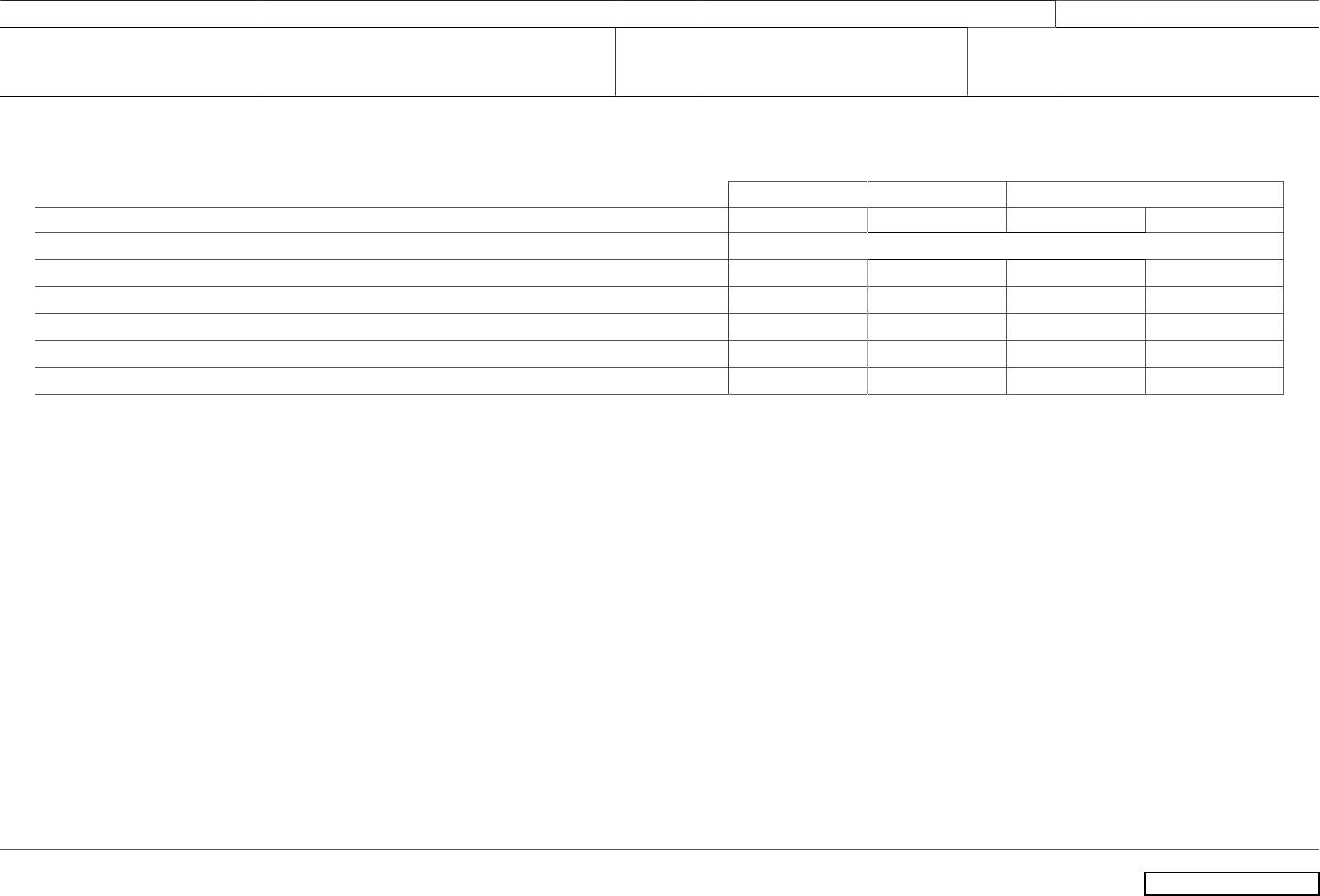
FY 2019 FY 2020 FY 2021 FY 2022 FY 2023 FY 2024 FY 2025
1 2 3 4 1 2 3 4 1 2 3 4 1 2 3 4 1 2 3 4 1 2 3 4 1 2 3 4
AFSCN
AFSCN Deficiency Resolution
GEN Satellite Operations Transmits and
Receive
GEN Defensive Cyberspace Operations for
Space (DCO-S)
Multi Band Multi Mission (MBMM) EMD
Commercial Augmentation Segmentation
(CAS) EMD
Volume 1 - 251
UNCLASSIFIED
PE 1203110SF: Satellite Control Network (SPACE)
UNCLASSIFIED
Air Force Page 10 of 10 R-1 Line #28
Exhibit R-4A, RDT&E Schedule Details: PB2021Air Force
Date: February 2020
Appropriation/Budget Activity
3620F / 7
R-1 Program Element (Number/Name)
PE 1203110SF / Satellite Control Network
(SPACE)
Project (Number/Name)
673276 / Satellite Control Network
Schedule Details
Start End
Events by Sub Project Quarter Year Quarter Year
AFSCN
AFSCN Deficiency Resolution 1 2021 4 2025
GEN Satellite Operations Transmits and Receive 1 2021 4 2025
GEN Defensive Cyberspace Operations for Space (DCO-S) 1 2021 4 2025
Multi Band Multi Mission (MBMM) EMD 2 2021 4 2025
Commercial Augmentation Segmentation (CAS) EMD 2 2021 3 2023
Volume 1 - 252
